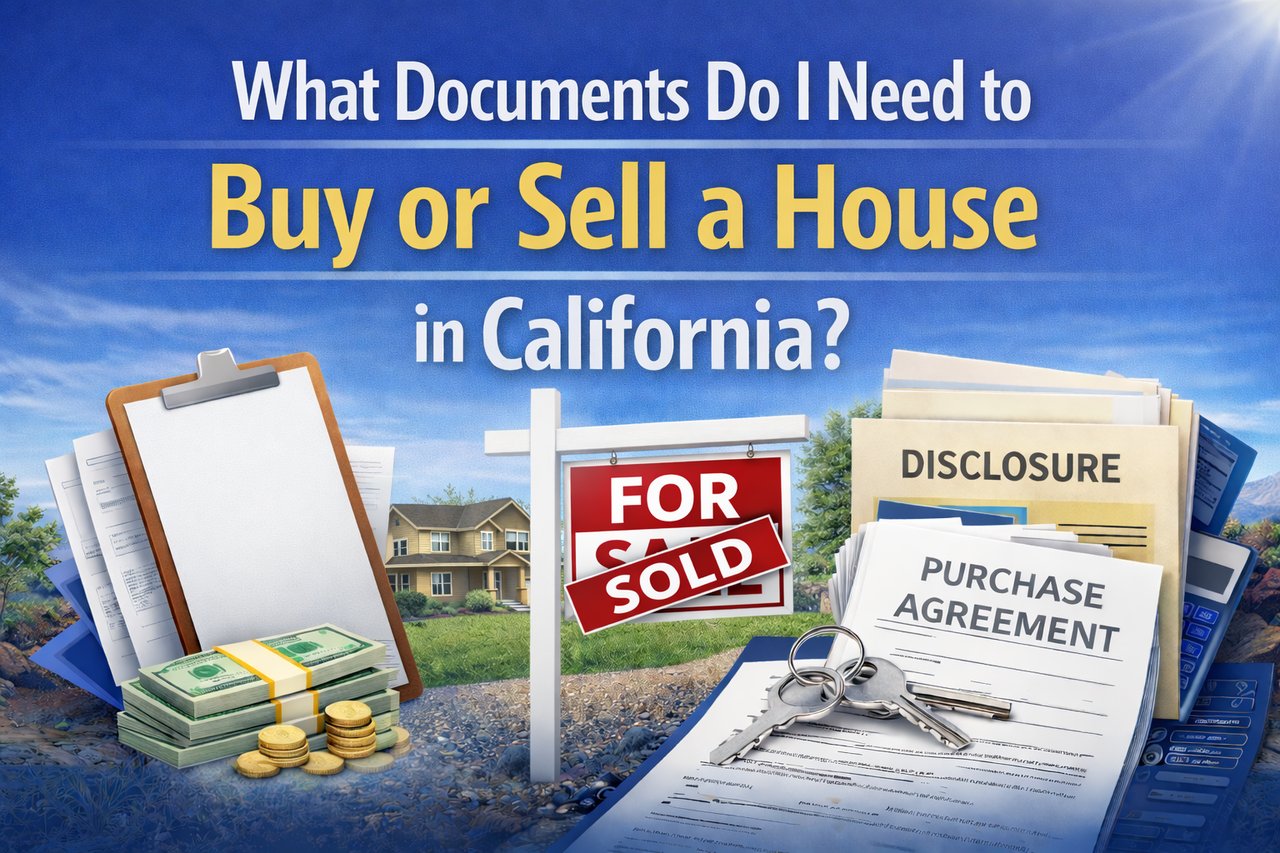
What Documents Do I Need to Buy or Sell a House in California?
Real Estate Contracts, Disclosures & Property Taxes Explained
Real Estate Contracts, Disclosures & Property Taxes Explained
One of the most common questions I get from buyers and sellers is this: what documents do I actually need to buy or sell a house?
It is a fair question because once people start a real estate transaction, they quickly realize there is a lot of paperwork involved.
The good news is that while every transaction is a little different, there are some key documents that come up in almost every purchase or sale.
What I tell clients is that the paperwork becomes much less stressful once you understand what each document is for and when it usually shows up.
In this guide, I’ll walk through the main documents buyers and sellers typically need in California, what those documents do, and why they matter.
For a broader overview of contracts, disclosures, and tax-related topics, start here:
👉 https://re38.com/san-jose-real-estate-contracts-disclosures-tax-guide
When you are buying a home, the first set of documents usually focuses on proving that you are financially ready and legally prepared to move forward.
These often include:
Government-issued photo ID
Pre-approval letter
Proof of funds
Income documentation
Asset statements
Employment verification
If you are financing the purchase, one of the most important early steps is getting pre-approved.
That is why I often recommend buyers first read:
👉 https://re38.com/blog/should-i-get-pre-approved-or-pre-qualified-2026-san-jose-and-bay-area-buyer-guide
And if you want to understand what lenders usually review, this is also helpful:
👉 https://re38.com/blog/how-does-the-pre-approval-process-work-in-san-jose-2026-bay-area-buyer-guide
Both buyers and sellers need to verify identity during a real estate transaction.
This usually includes:
Driver’s license
Passport
Other government-issued photo identification
Escrow, title, and lenders need to make sure the legal documents match the exact identity of the person signing.
It sounds basic, but even small name mismatches can create delays, so this is something I like to make sure is clean early in the process.
If you are buying with a loan, you will usually need a pre-approval letter before making an offer.
That letter helps show the seller that:
Your finances have been reviewed
You are serious
You are in a position to perform
If you are buying with cash, you will usually need proof of funds, such as:
Recent bank statements
Investment account statements
Documentation showing enough liquid funds to close
In a competitive market like San Jose, this paperwork matters because sellers want confidence that the buyer can actually complete the purchase.
If you are getting a mortgage, your lender will usually ask for a fuller package of financial documents.
These may include:
Recent pay stubs
W-2 forms
Tax returns
Bank statements
Investment account statements
Employment verification
Business returns or profit and loss statements if you are self-employed
A lot of buyers underestimate how document-heavy the lending side can be.
If you want to better understand affordability and financing prep, these guides can help:
👉 https://re38.com/blog/how-much-house-can-i-afford-in-san-jose
👉 https://re38.com/blog/how-do-debt-to-income-ratios-affect-loan-approval-in-san-jose-2026-guide
Once a buyer writes an offer and a seller accepts, one of the most important documents in the transaction is the purchase agreement.
This is the contract that outlines the main terms of the deal, including:
Purchase price
Deposit amount
Contingencies
Closing timeline
Included and excluded items
Rights and responsibilities of both parties
I always tell clients this is one of the most important documents in the entire transaction because it sets the legal framework for everything that follows.
If you want to understand what happens after an offer is accepted, read:
👉 https://re38.com/blog/what-happens-after-my-offer-is-accepted
Once a contract is accepted, buyers usually submit an earnest money deposit.
That process often includes:
Deposit instructions
Escrow wiring instructions
Confirmation of funds sent
Escrow receipt records
If someone is new to buying, it helps to understand how that deposit works and what is considered normal.
For that, see:
👉 https://re38.com/blog/what-is-earnest-money-and-how-much-is-normal-in-san-jose-2026-guide
Disclosure documents are a major part of the transaction, especially in California.
These documents help explain the condition of the property and disclose known facts that could affect the buyer’s decision.
Depending on the property and situation, disclosures may include information about:
Property condition
Known defects
Past repairs
Environmental hazards
Death on property in certain cases
HOA details
Other material facts the seller is aware of
I always tell buyers to take disclosures seriously because they are one of the biggest tools for understanding what you are really buying.
On the seller side, preparing disclosures carefully matters just as much. This related guide may help:
👉 https://re38.com/blog/what-should-i-repair-or-disclose-before-selling-my-home-in-san-jose-a-sellers-guide
And for the broader tax side of preparation and ownership changes, this is the first existing blog in this pillar:
👉 https://re38.com/blog/what-tax-implications-come-with-buying-or-selling-a-home-in-san-jose
During escrow, buyers may also deal with documents tied to inspections, appraisals, and contingencies.
These can include:
Inspection reports
Appraisal reports
Requests for repairs
Contingency removal forms
Investigation-related documents
These documents matter because they directly affect your legal and financial protection during the transaction.
If you want more detail on that part of the process, these guides are especially relevant:
👉 https://re38.com/blog/should-i-get-a-home-inspection-and-what-does-it-cover-in-san-jose-2026-guide
👉 https://re38.com/blog/how-does-the-appraisal-work-and-what-if-it-comes-in-low-in-san-jose-2026-guide
As the transaction moves toward closing, buyers and sellers both sign another group of important documents.
These often include:
Escrow instructions
Settlement statements
Closing disclosures
Loan documents
Vesting documents
Title-related paperwork
Final signing documents
This is where all the paperwork comes together and ownership officially transfers.
If you want a more detailed breakdown of that phase, read:
👉 https://re38.com/blog/what-happens-during-escrow-and-closing-in-san-jose-2026-guide
On the seller side, the document list is a little different.
Sellers often need:
Government-issued ID
Listing agreement
Seller disclosure forms
HOA documents if applicable
Permit records if available
Mortgage payoff information
Trust or estate documents if applicable
Repair invoices or upgrade records
Escrow and title paperwork
I usually tell sellers that the more organized they are upfront, the smoother the transaction tends to be.
That is especially true if the home has:
Been remodeled
Had unpermitted work
Is held in a trust
Is part of an estate sale
Has HOA involvement
Has solar or other transferable contracts
One thing I always tell clients is that the paperwork itself is not usually the problem.
The problem is when people are not prepared for it.
When buyers and sellers understand which documents matter and gather them early, the process usually becomes much smoother.
That helps:
Reduce delays
Prevent confusion
Improve communication with escrow and lenders
Lower the chance of last-minute surprises
Make the transaction feel more manageable
This is one reason working with the right agent matters. A good agent is not just there to unlock doors or put a sign in the yard. A good agent helps you understand the paperwork, the deadlines, and what each step means.
Before a client buys or sells, I usually recommend focusing on a few basics first.
For buyers:
Get pre-approved early
Gather financial documents before home shopping gets serious
Be ready to review disclosures carefully
Understand the main contract terms before writing an offer
For sellers:
Confirm ownership details early
Gather permit, repair, and HOA records if available
Prepare disclosures carefully
Be ready for title, escrow, and payoff-related paperwork
The better prepared you are upfront, the smoother the process tends to be.
Real estate documents are not just paperwork.
They affect your timeline, your legal protections, your financial risk, and your overall experience in the transaction.
That is why I always try to make sure my clients understand not just what they are signing, but why it matters.
When buyers and sellers understand the process, they make better decisions and feel much more confident from start to finish.
📞 Need Help Understanding the Paperwork Before You Buy or Sell?
If you are thinking about buying or selling and want help understanding the documents involved before you get too far into the process, feel free to reach out.
Zaid Hanna
408-515-1613
www.re38.com
Stay up to date on the latest real estate trends.
October 2, 2026

October 2, 2026
October 2, 2026

October 2, 2026

October 2, 2026
September 30, 2026
You’ve got questions, and we can’t wait to answer them.