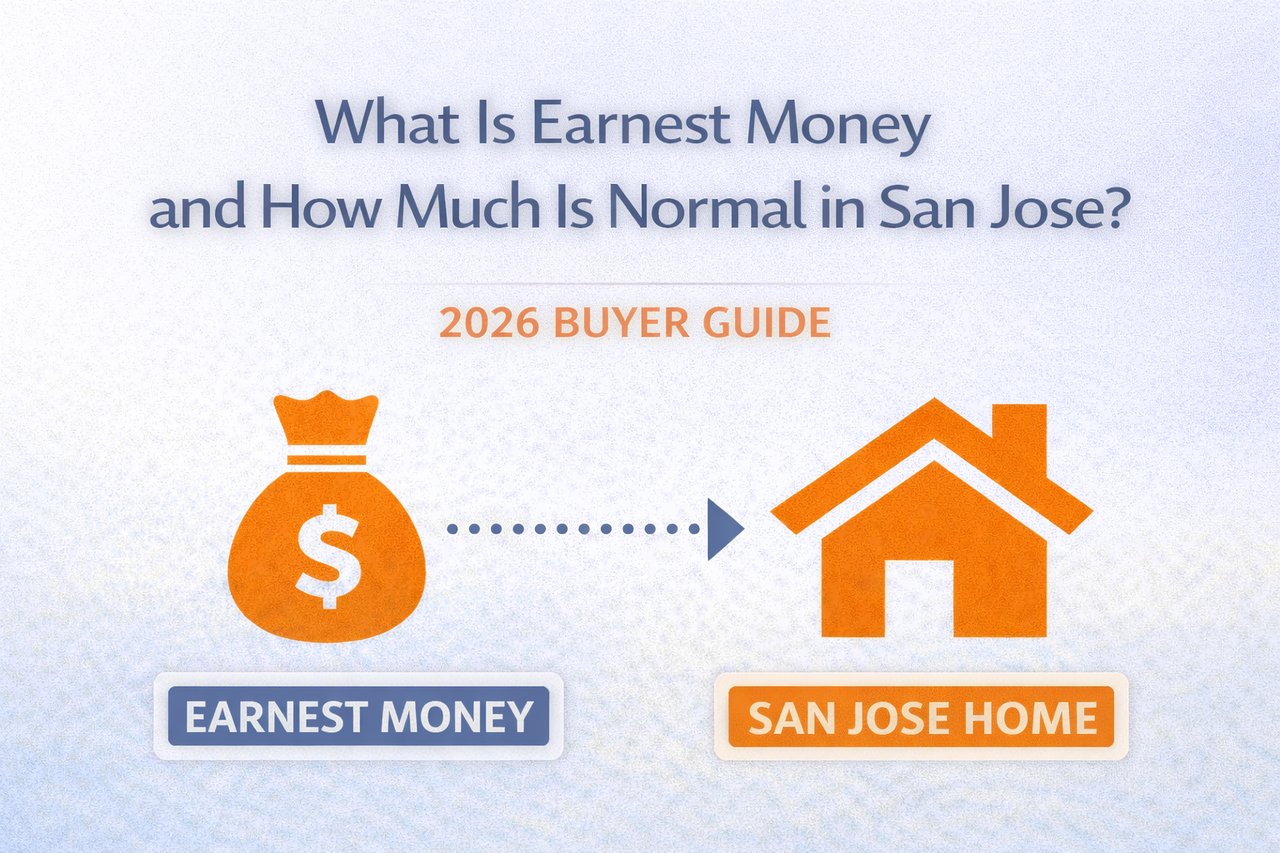
What Is Earnest Money and How Much Is Normal in San Jose? (2026 Guide)
Home Buying Process: Step-by-Step Guides for San Jose Buyers
Home Buying Process: Step-by-Step Guides for San Jose Buyers
Once buyers decide how much to offer on a home, the next question almost always comes up:
“What is earnest money?”
“How much do I need to put down?”
“Is it refundable?”
“What happens if something goes wrong?”
In San Jose, earnest money plays an important role in making your offer competitive — but it’s also one of the most misunderstood parts of the buying process.
This guide explains what earnest money is, how much is normal in San Jose, and how buyers protect it, so you can move forward confidently in 2026.
For a full overview of the buying process, start here:
👉 https://re38.com/san-jose-home-buying-process-guide
Earnest money is a good-faith deposit a buyer provides after an offer is accepted.
It shows the seller that you’re serious about moving forward and willing to put money at risk — within the protections of your contract.
Earnest money is:
deposited into escrow
held by a neutral third party
credited toward your purchase at closing
It is not an extra fee — it becomes part of your down payment and closing funds.
In San Jose, earnest money is typically:
1%–3% of the purchase price
For example:
$1,200,000 purchase → $12,000–$36,000 earnest money
The exact amount depends on:
market conditions
offer competitiveness
price point
buyer comfort level
Higher earnest money can strengthen an offer, but it should always be balanced with risk protection.
For offer-strategy context, review:
👉 https://re38.com/blog/how-much-should-i-offer-on-a-house-san-jose
In most San Jose transactions:
earnest money is due within 1–3 business days after offer acceptance
funds are typically wired to escrow
Timely delivery is important — delays can raise red flags or create contract issues.
Yes — as long as contingencies are still in place.
Earnest money is generally refundable if you cancel the contract under a valid contingency, such as:
inspection contingency
appraisal contingency
financing contingency
Once contingencies are removed, earnest money typically becomes non-refundable.
Understanding when and how contingencies protect you is critical.
For a deeper breakdown, see:
👉 https://re38.com/blog/how-do-contingencies-work-inspection-appraisal-financing
Earnest money remains in escrow while:
inspections are completed
the appraisal is ordered
the loan is finalized
At closing:
it is applied toward your purchase
it reduces the amount you need to bring to closing
If the transaction does not close and contingencies were properly used, earnest money is returned to the buyer.
To understand the full escrow timeline, review:
👉 https://re38.com/blog/what-happens-after-my-offer-is-accepted-san-jose
In competitive situations, earnest money can:
signal buyer confidence
reassure sellers
support stronger terms
However, more is not always better.
The goal is to:
remain competitive
protect your funds
avoid unnecessary risk
Earnest money should support your offer — not create anxiety.
Some common issues I see:
assuming earnest money is non-refundable immediately
putting more down than they’re comfortable risking
removing contingencies too quickly
not fully understanding contract timelines
Most problems can be avoided with proper guidance and planning.
Before deciding how much earnest money to put down, it’s important to:
understand your contingencies
know your comfort level
align with current market conditions
coordinate with your lender and escrow timeline
I help buyers structure offers that are:
competitive
protected
aligned with their goals
👉 If you want help preparing a strong, safe offer, reach out here:
https://re38.com/contact
Earnest money doesn’t have to be confusing or stressful.
A short conversation can help you understand how much makes sense — and how to protect yourself throughout the process.
Zaid Hanna
408-515-1613
www.re38.com
Stay up to date on the latest real estate trends.

October 2, 2026

October 2, 2026
October 2, 2026

October 2, 2026

October 2, 2026

September 30, 2026
You’ve got questions, and we can’t wait to answer them.