How Do Contingencies Work (Inspection, Appraisal, Financing) in San Jose? (2026 Guide)
Home Buying Process: Step-by-Step Guides for San Jose Buyers
Home Buying Process: Step-by-Step Guides for San Jose Buyers
Contingencies are one of the most important — and misunderstood — parts of buying a home.
Buyers often ask:
“What exactly is a contingency?”
“When am I protected?”
“When is my earnest money at risk?”
“Do I really need all of them?”
In San Jose, contingencies are the primary way buyers protect themselves during escrow. Understanding how they work — and when they expire — can make the difference between a smooth purchase and a costly mistake.
This guide explains how inspection, appraisal, and financing contingencies work, how they protect buyers, and how to use them wisely in 2026.
For a full overview of the buying process, start here:
👉 https://re38.com/san-jose-home-buying-process-guide
A contingency is a condition written into the purchase contract that allows a buyer to:
continue forward only if certain conditions are met, or
cancel the contract without penalty if those conditions aren’t satisfied
Contingencies give buyers time to:
gather information
evaluate risk
make informed decisions
They are not loopholes — they are legal protections.
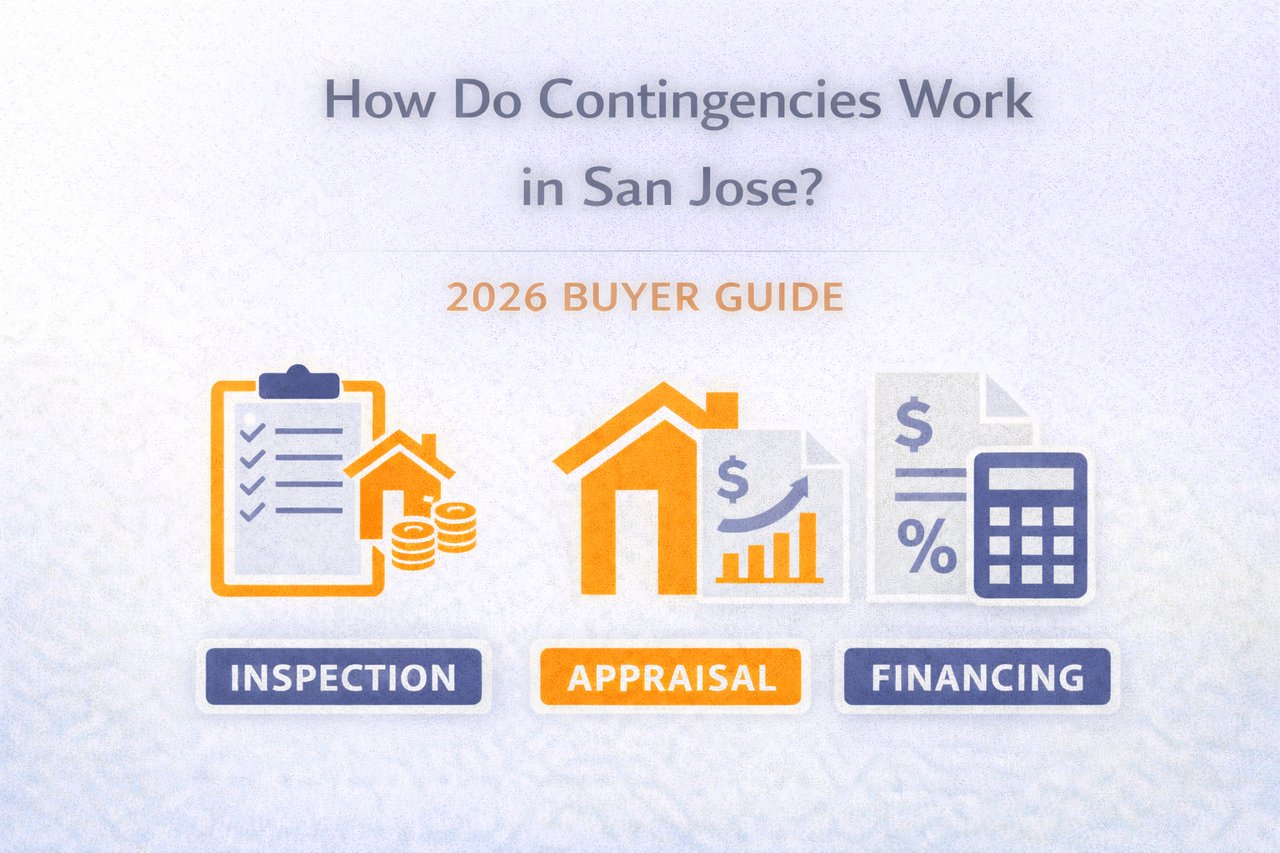
The inspection contingency allows buyers time to:
complete home inspections
review reports
assess repair needs
decide whether to proceed
If inspections uncover significant issues, buyers may:
request repairs
ask for credits
renegotiate price
cancel the contract
As long as the inspection contingency is active, earnest money is typically protected.
For inspection details, see:
👉 https://re38.com/blog/should-i-get-a-home-inspection-what-does-it-cover-san-jose
The appraisal contingency protects buyers if the home appraises below the purchase price.
If the appraisal comes in low, buyers may:
renegotiate price
increase their down payment
challenge the appraisal
cancel the contract
Without an appraisal contingency, buyers may be required to cover the difference out of pocket.
For appraisal context, review:
👉 https://re38.com/blog/how-does-the-appraisal-work-what-if-it-comes-in-low-san-jose
The financing contingency protects buyers if:
the loan is not approved
terms change significantly
underwriting issues arise
Even with pre-approval, financing is not guaranteed until final loan approval is issued.
This contingency ensures buyers aren’t forced to close without financing.
For mortgage context, see:
👉 https://re38.com/san-jose-home-loan-mortgage-guide
Contingencies are directly tied to earnest money protection.
As long as contingencies are in place:
buyers can cancel for valid reasons
earnest money is typically refunded
Once contingencies are removed:
the buyer’s commitment becomes firm
earnest money usually becomes non-refundable
This timing is critical.
For earnest money basics, review:
👉 https://re38.com/blog/what-is-earnest-money-how-much-is-normal-san-jose
Contingencies are usually removed:
after inspections are reviewed
after the appraisal is accepted
after loan approval is secured
Removing contingencies is a deliberate decision, not a formality.
For escrow timing context, see:
👉 https://re38.com/blog/what-happens-during-escrow-and-closing-san-jose
Yes — but it increases risk.
In competitive markets, some buyers choose to:
shorten contingency periods
waive certain contingencies
In 2026, waiving contingencies is less common than during peak frenzy years, but it still happens in select situations.
Waiving protections should always be done intentionally and with full understanding of the risks.
Some common issues I see:
assuming contingencies are automatic
missing deadlines
removing contingencies too early
not understanding what’s still protected
Most mistakes can be avoided with clear guidance and planning.
In 2026:
contingencies are expected
buyers have more leverage
sellers understand buyer protections
contracts are more balanced
Using contingencies properly allows buyers to move forward with confidence — not fear.
Before removing contingencies, it’s important to:
understand inspection results
confirm appraisal value
secure loan approval
assess your comfort level
I help buyers:
understand contingency timelines
protect earnest money
make informed decisions
move through escrow confidently
👉 If you want help navigating contingencies, reach out here:
https://re38.com/contact
Contingencies aren’t meant to complicate your purchase — they’re meant to protect you.
A short conversation can help you understand how to use them effectively and avoid unnecessary risk.
Zaid Hanna
408-515-1613
www.re38.com
Stay up to date on the latest real estate trends.

September 23, 2026

September 21, 2026

September 18, 2026

September 17, 2026

September 14, 2026

September 11, 2026
You’ve got questions, and we can’t wait to answer them.