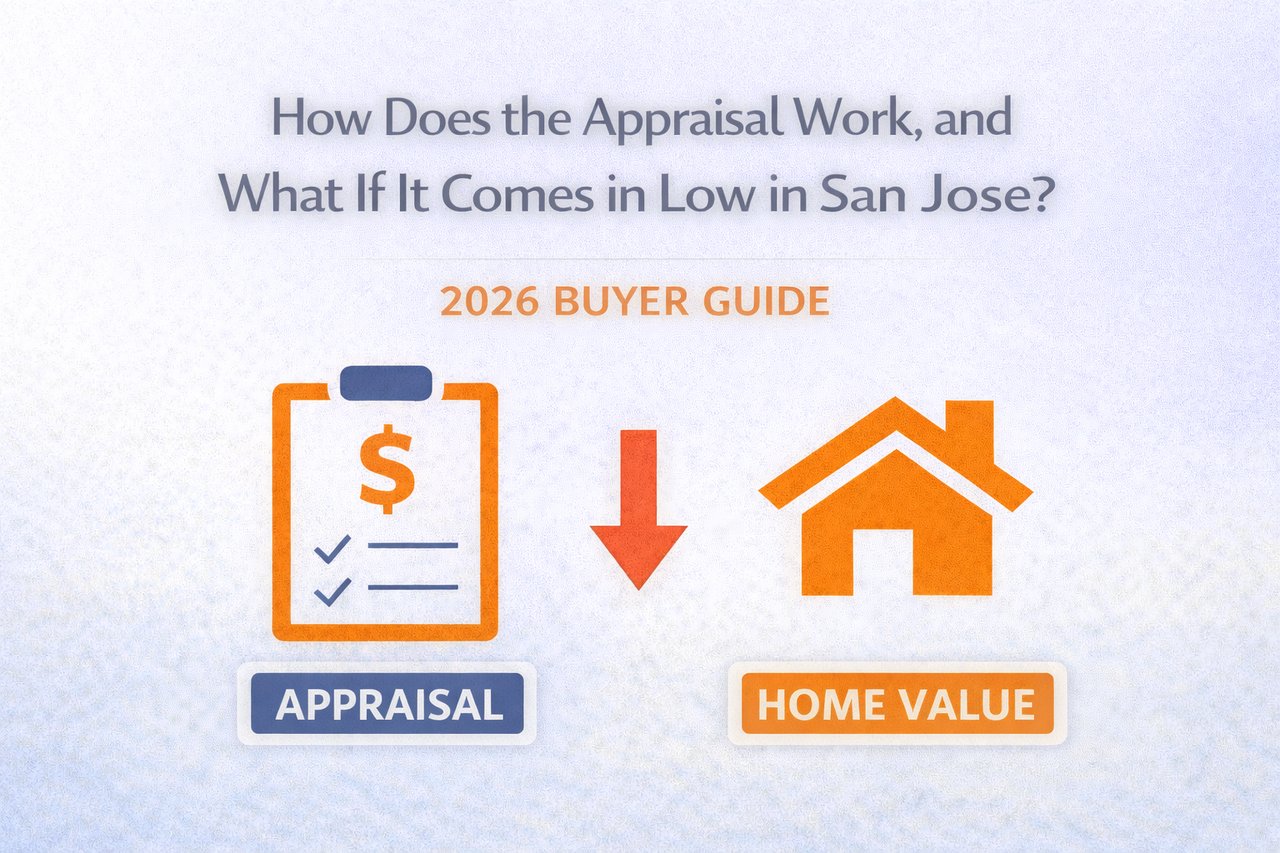
How Does the Appraisal Work, and What If It Comes in Low in San Jose? (2026 Guide)
Home Buying Process: Step-by-Step Guides for San Jose Buyers
Home Buying Process: Step-by-Step Guides for San Jose Buyers
After an offer is accepted and earnest money is deposited, one of the most important — and stressful — steps in the buying process is the appraisal.
Buyers often ask:
“What exactly is an appraisal?”
“Who orders it?”
“What if the appraised value comes in lower than the price?”
“Can the deal fall apart?”
In San Jose, appraisals don’t always behave the way buyers expect — especially in competitive neighborhoods or shifting markets.
This guide explains how the appraisal process works, why appraisals sometimes come in low, and what buyers can do when that happens, so you can move forward confidently in 2026.
For a full overview of the buying process, start here:
👉 https://re38.com/san-jose-home-buying-process-guide
A home appraisal is an independent opinion of value completed by a licensed appraiser.
The appraiser:
evaluates the home’s condition
compares it to recent nearby sales
considers location, upgrades, and layout
determines whether the price aligns with market value
Appraisals are required by lenders to ensure they are not lending more than the home is worth.
If you’re financing the purchase:
the lender orders the appraisal
the buyer pays for it as part of closing costs
the appraiser remains independent from all parties
Buyers and agents cannot choose the appraiser or influence the value.
For financing context, review:
👉 https://re38.com/san-jose-home-loan-mortgage-guide
Appraisals typically occur:
after inspections are completed
once the loan is in underwriting
before contingency removal
Timing matters, especially if escrow deadlines are tight.
A low appraisal doesn’t always mean the home is overpriced.
Common reasons include:
limited recent comparable sales
rapidly changing market conditions
unique or upgraded homes
multiple-offer situations pushing prices higher
conservative appraiser assumptions
In San Jose, appraisals often lag the market — especially in desirable neighborhoods.
If the appraisal meets or exceeds the purchase price:
the loan moves forward
appraisal contingency is satisfied
escrow continues smoothly
This is the ideal scenario.
If the appraisal comes in below the purchase price, buyers typically have several options:
The buyer can ask the seller to lower the price to match the appraisal.
Buyer and seller agree to meet somewhere in the middle.
The buyer brings additional cash to cover the gap.
In some cases, the lender may allow a reconsideration of value with better comparable sales.
If protected by an appraisal contingency, the buyer can cancel the contract and receive earnest money back.
Understanding contingencies is critical here.
For a full breakdown, see:
👉 https://re38.com/blog/how-do-contingencies-work-inspection-appraisal-financing
As long as the appraisal contingency is in place:
earnest money remains protected
buyers can exit without penalty
Once contingencies are removed:
earnest money is typically at risk
This is why appraisal timing and strategy matter.
For earnest money context, review:
👉 https://re38.com/blog/what-is-earnest-money-how-much-is-normal-san-jose
Buyers can reduce appraisal risk by:
understanding current market conditions
reviewing comparable sales before offering
structuring smart contingencies
avoiding emotional overbidding
Appraisal risk is part of buying — but it can be managed.
For offer strategy guidance, see:
👉 https://re38.com/blog/how-much-should-i-offer-on-a-house-san-jose
In 2026:
appraisals still matter
markets are more balanced
buyers have more negotiation room
pricing accuracy is more important
Low appraisals are no longer rare — they’re part of a normalizing market.
Before making or accepting an offer, it’s important to:
understand appraisal risk
know your options
align expectations with market reality
I help buyers:
prepare strong offers
navigate low appraisals
protect earnest money
move through escrow confidently
👉 If you want help navigating the appraisal process, reach out here:
https://re38.com/contact
The appraisal doesn’t have to derail your purchase.
A short conversation can help you understand how appraisals work — and what to do if value becomes an issue.
Zaid Hanna
408-515-1613
www.re38.com
Stay up to date on the latest real estate trends.

September 23, 2026

September 21, 2026

September 18, 2026
September 17, 2026

September 14, 2026

September 11, 2026
You’ve got questions, and we can’t wait to answer them.