First-Time Home Buyer Mistakes in San Jose: 12 Costly Errors to Avoid Before You Buy
Home Buyer

Home Buyer
Buying your first home in San Jose is exciting, but it can also be overwhelming if you do not know what to expect.
I have worked with buyers across San Jose, Silicon Valley, and the greater Bay Area for many years, and one thing I have learned is this: most first-time buyer mistakes do not happen because people are careless. They happen because buyers are moving through a fast, expensive, competitive market without the right information at the right time.
San Jose is not a market where buyers can afford to guess.
The price point is high. The competition can change quickly. HOA dues can shift affordability. Disclosures matter. Appraisal gaps matter. A home that looks good online may have issues that only show up once you know how to read the full package.
That is why I wanted to put together this guide. If you are buying your first home in San Jose, these are the mistakes I would want you to avoid before you write an offer.
For a bigger picture view of the buying process, you can also visit our San Jose Home Buying Process Guide here:
https://re38.com/san-jose-home-buying-process-guide
You can also learn more about how we help buyers here:
A lot of first-time buyers start with the listing price.
That is understandable, but in San Jose, the listing price does not tell the full story.
Your real monthly payment depends on several things, including your loan amount, interest rate, down payment, property taxes, insurance, HOA dues, and whether the property has special assessments or other costs.
This matters because two homes listed at similar prices can have very different monthly payments.
For example, a condo with higher HOA dues may look more affordable online, but the monthly payment may not be that different from a townhome or single-family home once everything is included. On the other hand, a slightly higher-priced property with lower monthly carrying costs may actually be a better fit.
Before you fall in love with a home, I want you to understand the full payment, not just the price.
In San Jose, a casual pre-qualification is not enough.
If you are serious about buying, you need a real pre-approval from a lender who has reviewed your financials. That usually means income, assets, credit, tax returns, bank statements, debt, and any other details that could affect your loan.
The reason this matters is simple: when the right home comes up, you may not have days or weeks to get ready.
Good homes in strong San Jose locations can move quickly. If you wait until you find the home to start the financing process, you may already be behind the buyers who are prepared.
A strong pre-approval also helps your offer look more credible to the listing agent and seller. In a competitive situation, that can make a real difference.
This is one of the biggest mistakes I see from first-time buyers.
In San Jose, the list price is not always the market value. Sometimes a home is priced low to create activity. Sometimes it is priced high and sits. Sometimes the price is accurate, but the market response tells us something different.
You cannot judge value by the list price alone.
You need to look at recent comparable sales, property condition, location, lot size, layout, upgrades, school boundaries, HOA rules if applicable, and current buyer demand. You also need to know how that specific property type is performing right now.
A Willow Glen single-family home, a Berryessa townhome, a Downtown San Jose condo, and an Evergreen home with a larger lot may all behave differently.
That is why we study the data before writing. The goal is not just to make an offer. The goal is to make a smart offer.
Online estimates can be useful as a rough starting point, but they should not be used as the final word on value.
San Jose neighborhoods can change street by street. Condition matters. Floor plan matters. Lot usability matters. Remodel quality matters. School boundaries, commute routes, HOA health, permits, and disclosures can all change what a home is worth.
An algorithm does not always understand those details the way a local agent does.
If you are buying your first home, do not make your decision based only on an online estimate. Use it as one data point, then compare it against real market activity and local property-specific details.
That is where experienced local guidance becomes extremely important.
A lot of San Jose first-time buyers start with condos or townhomes because they can be more affordable than single-family homes.
That can be a smart move, but you have to understand the full cost of ownership.
HOA dues can affect your monthly payment and your loan qualification. You also need to review what the HOA covers, what it does not cover, whether there are special assessments, how much money is in reserves, and whether there are any major repairs coming up.
A lower purchase price does not automatically mean a better deal.
When we look at a condo or townhome, I want to understand the total picture: price, payment, HOA dues, rules, reserves, insurance, rental restrictions, maintenance history, and long-term resale potential.
In San Jose and across California, disclosures are a major part of the buying process.
Before you write an offer, you should understand what the seller is disclosing, what inspections are available, what repairs or defects are noted, and whether there are any red flags that could affect your comfort level or future resale.
This may include roof age, foundation concerns, drainage issues, pest findings, permit questions, remodel history, HOA documents, neighborhood conditions, or previous insurance claims.
First-time buyers sometimes focus only on the photos, layout, and location. Those matter, but the disclosure package tells you the deeper story.
A home can look beautiful online and still have issues that need to be understood before you commit.
Condos, townhomes, and single-family homes do not always compete the same way in San Jose.
A first-time buyer might look at all three options, but each property type has a different set of risks, costs, and negotiation points.
With condos, we pay close attention to HOA dues, reserves, insurance, rental restrictions, building maintenance, and litigation concerns.
With townhomes, we look at layout, attached walls, parking, HOA structure, outdoor space, and how the community compares to nearby alternatives.
With single-family homes, we focus more on lot size, condition, inspection findings, foundation, roof, neighborhood demand, expansion potential, and long-term resale strength.
The mistake is assuming the same strategy works for every home. It does not.
Your offer strategy should match the property type, the market conditions, and the seller’s situation.
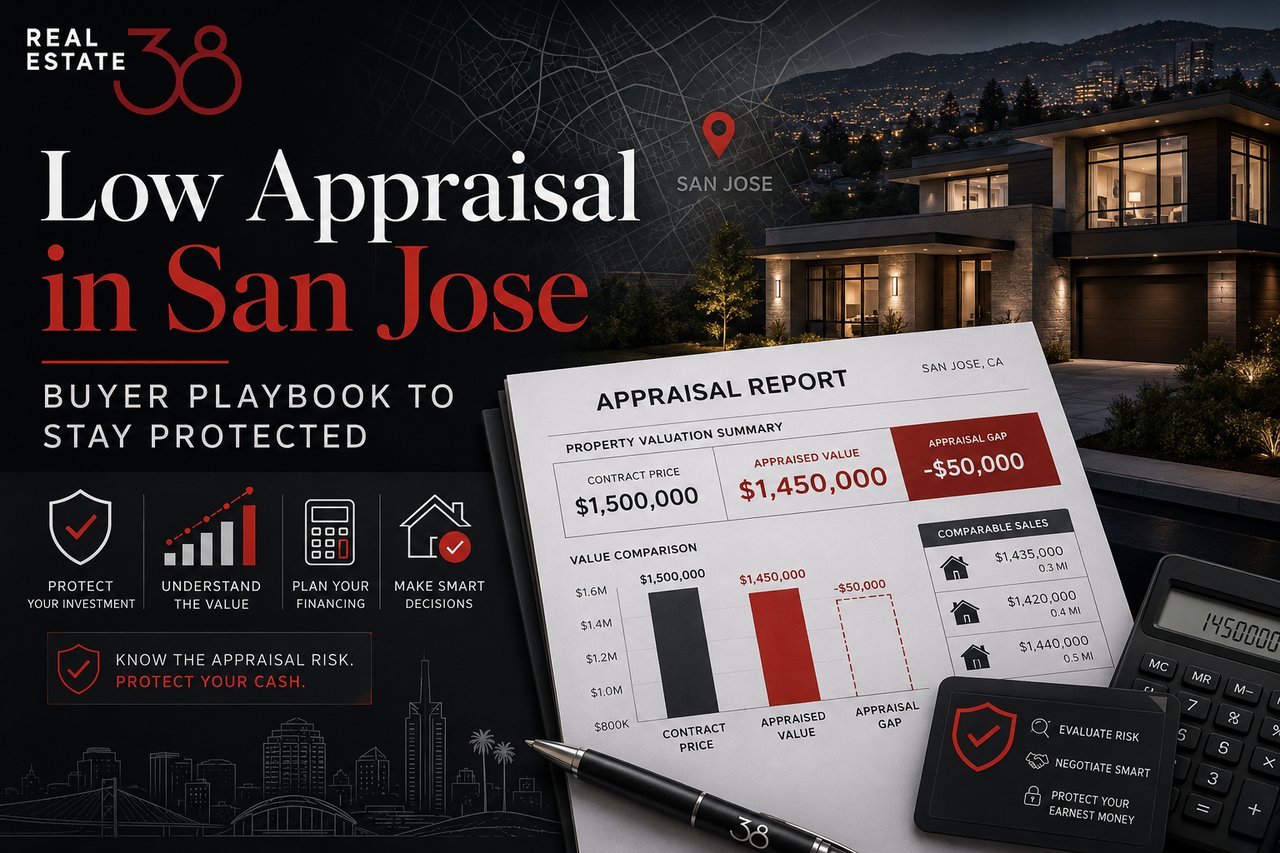
In a competitive San Jose market, buyers may sometimes offer above the recent comparable sales to win the home.
That does not automatically mean the appraiser will agree with the contract price.
If the appraisal comes in lower than the purchase price, the buyer and seller may need to negotiate, or the buyer may need to cover part of the difference depending on the terms of the offer.
This is where first-time buyers need to be very careful.
You should understand the appraisal risk before writing the offer, not after. We look at recent sales, pending activity when available, pricing trends, and how aggressive the offer needs to be. Then we talk through what happens if the appraisal comes in low.
The goal is to compete without putting you in a position you do not understand.
In competitive situations, buyers sometimes feel pressure to waive contingencies or shorten timelines.
That can make an offer stronger, but it can also create risk if you do not fully understand what you are giving up.
A contingency is not just paperwork. It is a protection.
Depending on the offer, contingencies may relate to your loan, appraisal, inspections, disclosures, or other important parts of the transaction. Removing or shortening them should be a strategic decision, not an emotional one.
My job is to explain the risk clearly so you can make an informed decision. Sometimes being aggressive makes sense. Sometimes it does not. The key is knowing the difference.
I understand why buyers want the perfect home, especially in San Jose where the investment is significant.
But waiting for perfect can be expensive.
The perfect home may not show up in your price range, preferred neighborhood, and ideal condition all at the same time. If it does, many other buyers may want it too.
Instead of chasing perfect, I encourage first-time buyers to define what really matters.
What are your non-negotiables? What can be improved later? What location factors matter most? What will affect resale? What issues are cosmetic, and what issues are structural or financial?
The right home is not always the one that checks every single box. It is the one that fits your goals, budget, lifestyle, and long-term plan.
In San Jose, buyers should be prepared for competition before they are in the middle of it.
A strong offer is not only about price.
Terms matter. Timing matters. The lender matters. Communication with the listing agent matters. Understanding the seller’s priorities matters. Your deposit, contingency structure, close timeline, and level of preparation can all influence how your offer is received.
This is especially important for first-time buyers because you may be competing against buyers who have been through the process before.
Before we write, I want you to understand the entire offer strategy. That includes how we position you, where we protect you, and where we can make the offer more attractive without blindly overpaying.
Buying your first home is a big decision. Buying your first home in San Jose is an even bigger one.
This is not a market where you want generic advice.
You need someone who understands San Jose neighborhoods, pricing patterns, disclosure risks, offer strategy, property types, and how local agents communicate during negotiations.
The right agent should help you understand value, protect your downside, compete when needed, and avoid mistakes that could cost you money or the right home.
At Real Estate 38, our process is built around preparation, data, strategy, and local expertise. My goal is not just to help you buy a home. My goal is to help you buy the right home with confidence.
Before you write an offer, make sure you have these pieces in place:
This is how you avoid guessing.
Do not rush into a home just because you are excited.
Do not wait forever because you are afraid.
The best path is preparation.
When you understand your numbers, your options, the market, and the risks, you can make a much better decision. You do not need to know everything before you start, but you do need the right guidance before you write.
If you are thinking about buying your first home in San Jose, I would rather help you prepare early than have you feel pressured later.
You can learn more about our buying process here:
For a deeper step-by-step guide, visit:
https://re38.com/san-jose-home-buying-process-guide
And when you are ready to talk through your options, you can reach us here:
For more guidance, learn about buying a home in San Jose, explore current homes for sale, compare San Jose neighborhoods, or meet Zaid Hanna and the Real Estate 38 team.
Zaid Hanna
408-515-1613
www.re38.com
Stay up to date on the latest real estate trends.

June 10, 2026

June 8, 2026

June 5, 2026

May 29, 2026

May 28, 2026
May 18, 2026
You’ve got questions, and we can’t wait to answer them.