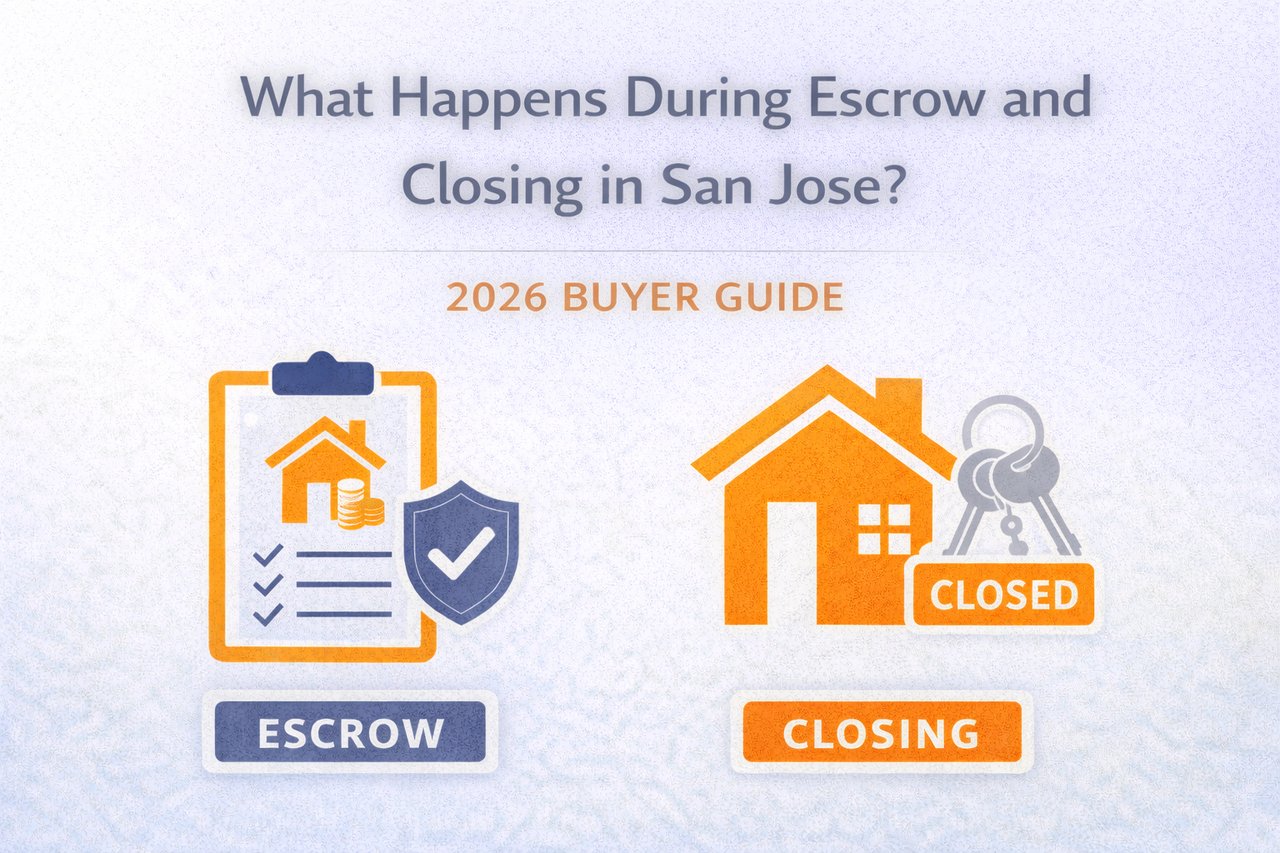
What Happens During Escrow and Closing in San Jose? (2026 Guide)
Home Buying Process: Step-by-Step Guides for San Jose Buyers
Home Buying Process: Step-by-Step Guides for San Jose Buyers
After inspections and appraisal are underway, many buyers start asking a bigger-picture question:
“What exactly is escrow?”
“What happens between now and closing?”
“When do I remove contingencies?”
“What could delay the process?”
In San Jose, escrow and closing are where all the moving pieces come together — contracts, financing, inspections, disclosures, and final approvals.
This guide walks you through what happens during escrow and closing, step by step, so you know what to expect and how to avoid surprises in 2026.
For a full overview of the buying journey, start here:
👉 https://re38.com/san-jose-home-buying-process-guide
Escrow is a neutral process managed by a third-party escrow company that:
holds funds
coordinates documents
ensures contract terms are met
protects both buyer and seller
Escrow does not represent either side — its role is to follow the contract precisely.
Once escrow is opened:
the purchase contract is received
timelines are confirmed
title work begins
disclosures are delivered
earnest money is deposited
If you’re unfamiliar with earnest money, review this first:
👉 https://re38.com/blog/what-is-earnest-money-how-much-is-normal-san-jose
During escrow, buyers receive seller disclosures, which may include:
property condition disclosures
inspection reports (if pre-sale inspections were done)
HOA documents (if applicable)
known material facts
This is where buyers learn the most about the home.
For legal and disclosure context, see:
👉 https://re38.com/san-jose-real-estate-contracts-disclosures-tax-guide
Escrow runs in parallel with:
buyer inspections
appraisal ordered by the lender
loan underwriting
Each step has its own timeline and contingency protection.
For deeper dives:
Inspections → 👉 https://re38.com/blog/should-i-get-a-home-inspection-what-does-it-cover-san-jose
Appraisal → 👉 https://re38.com/blog/how-does-the-appraisal-work-what-if-it-comes-in-low-san-jose
As escrow progresses, buyers decide whether to remove contingencies related to:
inspections
appraisal
financing
Once contingencies are removed:
the buyer’s commitment becomes firm
earnest money typically becomes non-refundable
Understanding this step is critical.
For a full breakdown, review:
👉 https://re38.com/blog/how-do-contingencies-work-inspection-appraisal-financing
As closing approaches:
underwriting issues final loan approval
any remaining lender conditions are cleared
closing figures are finalized
Avoid:
job changes
new credit inquiries
large purchases
Stability matters at this stage.
For mortgage context, see:
👉 https://re38.com/san-jose-home-loan-mortgage-guide
Just before closing, buyers complete a final walkthrough to:
confirm the home’s condition
verify agreed repairs were completed
ensure the property matches expectations
This is not another inspection — it’s a confirmation step.
At closing:
loan documents are signed
remaining funds are wired
title is recorded
ownership officially transfers
Once recording is confirmed, you receive the keys.
Even in 2026, escrow can be delayed due to:
appraisal issues
lender documentation delays
HOA document timing
title issues
unpermitted work
Most delays can be managed with proactive communication and experience.
Escrow doesn’t need to be stressful if you understand the process and timelines.
I help buyers:
track escrow milestones
understand disclosures
manage inspections and appraisal
coordinate with lenders and escrow
close smoothly and on time
👉 If you want help navigating escrow and closing, reach out here:
https://re38.com/contact
The escrow process can feel overwhelming — but it doesn’t have to be.
A short conversation can help you understand where you are, what’s next, and how to close with confidence.
Zaid Hanna
408-515-1613
www.re38.com
Stay up to date on the latest real estate trends.

September 23, 2026

September 21, 2026

September 18, 2026
September 17, 2026

September 14, 2026

September 11, 2026
You’ve got questions, and we can’t wait to answer them.