What Is a Buyer’s Market vs a Seller’s Market in San Jose? (2026 Guide)
San Jose Housing Market & Best Time to Buy or Sell
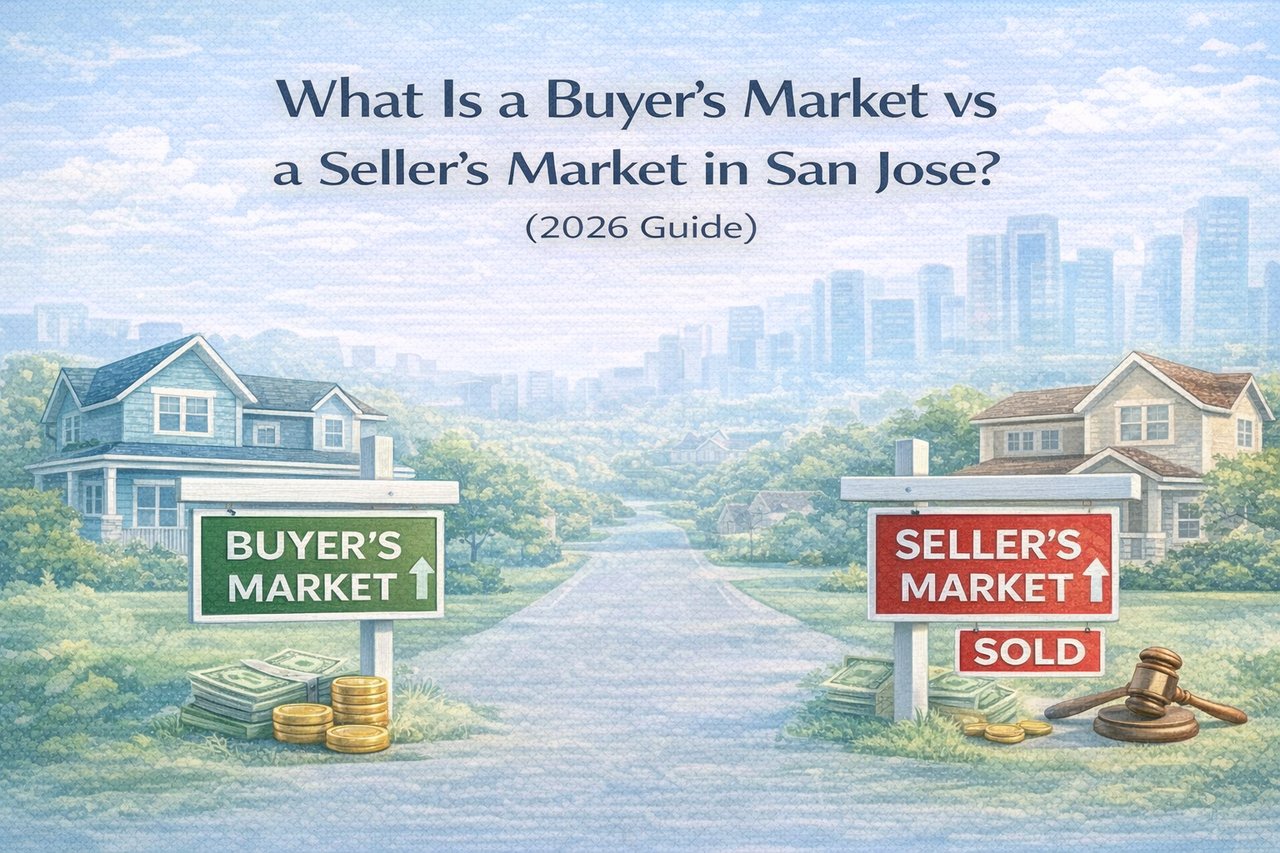
San Jose Housing Market & Best Time to Buy or Sell
You’ve probably heard the terms:
“It’s a buyer’s market.”
“It’s still a seller’s market.”
“The market is shifting.”
But what do those actually mean — especially in San Jose?
In 2026, understanding whether we’re in a buyer’s or seller’s market isn’t about headlines. It’s about local data.
This guide explains:
What a buyer’s market is
What a seller’s market is
How to measure it in San Jose
How to use that information strategically
For a broader market overview, start here:
👉 https://re38.com/san-jose-housing-market-guide
A seller’s market happens when:
Inventory is low
Buyer demand is high
Homes sell quickly
Multiple offers are common
Prices trend upward
In this environment:
Sellers have negotiating leverage
Buyers compete more aggressively
Contingencies may be shortened or removed
For seller timing strategy, see:
👉 https://re38.com/blog/is-now-a-good-time-to-sell-my-house-san-jose
A buyer’s market occurs when:
Inventory increases
Buyer demand slows
Homes stay on the market longer
Price reductions become common
Negotiation power shifts toward buyers
In this environment:
Buyers have more choices
Contingencies are stronger
Sellers may offer concessions
For buyer timing strategy, see:
👉 https://re38.com/blog/is-now-a-good-time-to-buy-a-house-san-jose
The most important metric is:
Formula:
Active Listings ÷ Pending Sales = Months of Inventory
General interpretation:
0–2 months → Strong seller’s market
3–4 months → Balanced market
5+ months → Buyer’s market
San Jose often operates in tighter supply than national averages — which means “balanced” here may still feel competitive.
Short DOM = stronger seller conditions
Longer DOM = shifting leverage
Over 100% = competitive
Under 100% = negotiating room
More pendings than actives = demand strength
For price direction context, review:
👉 https://re38.com/blog/will-home-prices-go-up-or-down-soon-san-jose
National news often says:
“The market is crashing.”
“The market is overheating.”
“Rates changed everything.”
But San Jose is driven by:
Local tech employment
Restricted housing supply
Income levels
Migration patterns
Equity positioning
For rate impact context, see:
👉 https://re38.com/blog/how-do-interest-rates-affect-home-prices-and-buyer-demand-in-san-jose-2026-guide
In 2026, San Jose may not fit a single label.
The market can be:
Competitive under $1.5M
Balanced in mid-range pricing
Slower at luxury price points
That’s why understanding micro-markets matters more than broad labels.
Many people wait for:
A stronger buyer’s market
A stronger seller’s market
Lower rates
Higher prices
But market cycles don’t move in straight lines.
Often, the right decision depends more on:
Personal timeline
Equity position
Payment comfort
Risk tolerance
Focus on payment and structure
Negotiate intelligently
Don’t chase headlines
Price correctly
Understand local absorption
Watch buyer activity
For full selling strategy, see:
👉 https://re38.com/sell-your-home-san-jose-guide
For full buying process overview, see:
👉 https://re38.com/san-jose-home-buying-process-guide
A buyer’s market and seller’s market are not emotional labels.
They are data conditions.
Understanding:
Inventory
Demand
Pricing behavior
Negotiation trends
…allows you to move confidently instead of reacting emotionally.
Markets shift — sometimes gradually, sometimes quickly.
If you want clarity on what’s happening specifically in your price range and neighborhood, let’s talk.
Zaid Hanna
408-515-1613
www.re38.com
Stay up to date on the latest real estate trends.

September 21, 2026

September 18, 2026
September 17, 2026

September 14, 2026

September 11, 2026

September 9, 2026
You’ve got questions, and we can’t wait to answer them.