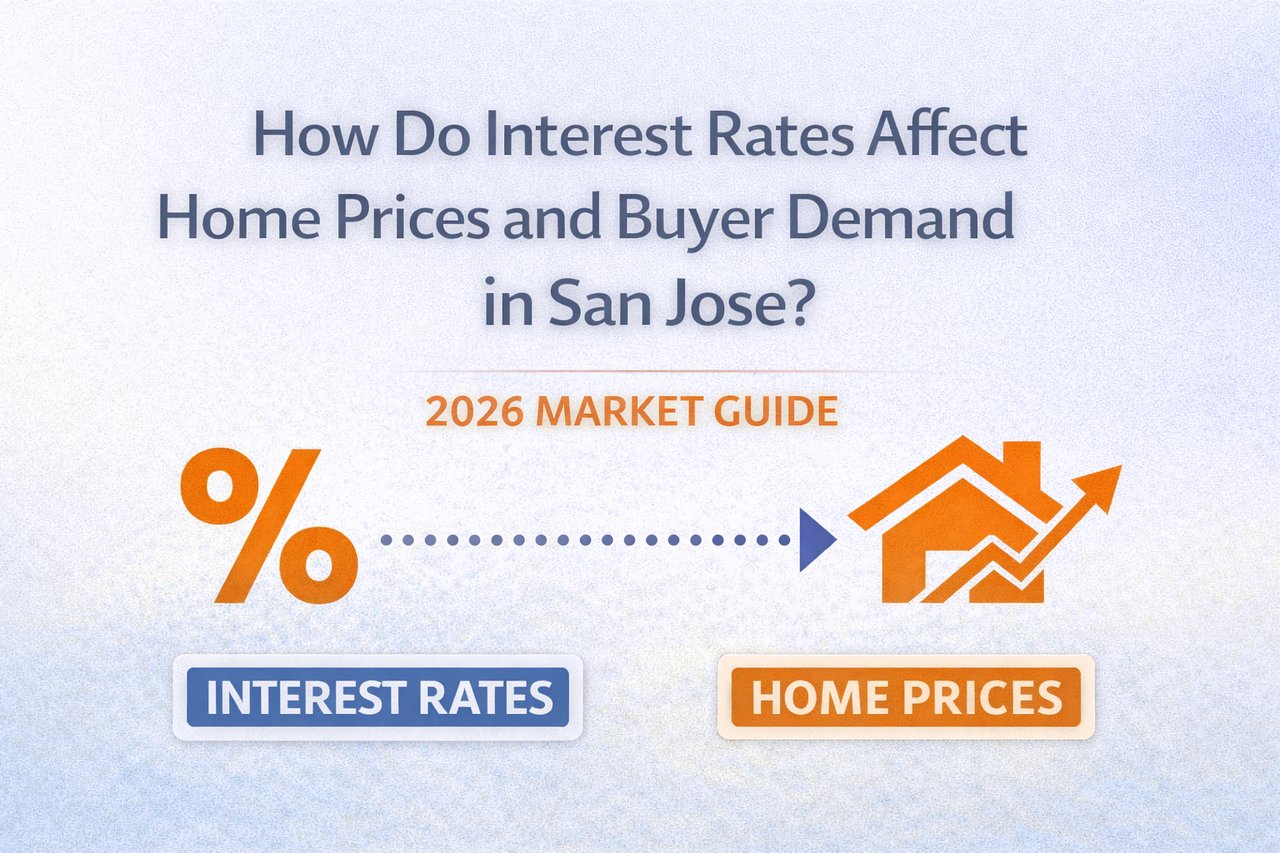
How Do Interest Rates Affect Home Prices and Buyer Demand in San Jose? (2026 Guide)
San Jose Housing Market & Best Time to Buy or Sell
San Jose Housing Market & Best Time to Buy or Sell
Interest rates are one of the most talked-about topics in real estate — and one of the most misunderstood.
As we move through 2026, buyers and homeowners often ask:
“If rates stay high, will prices fall?”
“Do lower rates automatically mean higher prices?”
“Why are homes still selling if rates aren’t low?”
“Should I wait for rates to change before buying or selling?”
The reality is that interest rates influence buyer behavior more than they directly control home prices, especially in a market like San Jose.
This guide explains how interest rates actually affect home prices and buyer demand in San Jose — and what that means for 2026.
For a broader look at the local market, start here:
👉 https://re38.com/san-jose-housing-market-guide
Interest rates primarily affect:
monthly payments
purchasing power
buyer confidence
When rates rise:
monthly payments increase
some buyers pause or lower budgets
competition often softens
When rates fall:
payments become more comfortable
more buyers re-enter the market
competition increases
Rates change demand first. Prices react later — and not always dramatically.
In many markets, higher rates lead to falling prices.
San Jose behaves differently.
Here’s why:
limited housing supply
strong long-term demand
high-income buyer base
desirable school districts and neighborhoods
Instead of large price drops, San Jose often experiences:
price flattening
selective adjustments
longer days on market
stronger performance for well-priced homes
Homes don’t crash — they reprice strategically.
In 2026, buyer demand hasn’t disappeared — it’s changed.
Buyers today are:
more analytical
payment-focused
less emotional
more willing to walk away
They are still active, especially when:
homes are priced correctly
condition is solid
location is strong
Demand becomes selective, not absent.
When interest rates ease:
sidelined buyers re-enter
competition increases
multiple offers return in desirable areas
price pressure can come back quickly
This is why waiting for lower rates can sometimes backfire — lower rates often come with more competition, not better deals.
It’s important to separate:
short-term affordability (rates)
long-term value (location + supply + demand)
Buyers who focus only on rates often miss opportunities created by:
reduced competition
negotiation leverage
inspection flexibility
In many cases, buyers can refinance later — but they can’t renegotiate the purchase price after closing.
For financing strategy context, review:
👉 https://re38.com/san-jose-home-loan-mortgage-guide
Higher rates don’t just impact buyers — they affect sellers too.
In a higher-rate environment:
buyers are more cautious
pricing accuracy matters more
preparation and presentation matter more
overpricing leads to longer market time
Sellers who understand rate-driven buyer behavior are better positioned to:
price realistically
attract serious buyers
reduce renegotiation
For seller preparation and pricing strategy, see:
👉 https://re38.com/sell-your-home-san-jose-guide
National headlines often oversimplify the relationship between rates and prices.
In San Jose, price behavior varies significantly by:
neighborhood
school district
home condition
price point
That’s why understanding local trends is more important than reacting to national news.
Explore neighborhood-level insights here:
👉 https://re38.com/neighborhoods/san-jose
In 2026:
rates influence when buyers act
supply influences how prices move
strategy determines outcomes
There is no universal “wait” or “act now” answer — only what aligns with your goals and comfort level.
For a deeper decision-making guide, review:
👉 https://re38.com/blog/should-i-wait-for-better-prices-or-rates-or-buy-sell-now-san-jose
Instead of focusing only on interest rates, it’s smarter to look at:
payment comfort
competition levels
pricing opportunities
long-term plans
I help buyers and sellers:
understand how rates impact their situation
evaluate real market leverage
plan strategically — not emotionally
👉 Let’s talk through your options:
https://re38.com/contact
You don’t need to predict rates to make a good decision.
A short conversation can help you understand how today’s rate environment affects your buying or selling plans — and whether acting now or waiting makes sense.
Zaid Hanna
408-515-1613
www.re38.com
Stay up to date on the latest real estate trends.

October 21, 2026

October 20, 2026

October 19, 2026

October 14, 2026
October 12, 2026

October 9, 2026
You’ve got questions, and we can’t wait to answer them.