How Do Property Taxes Work in Santa Clara County?
Real Estate Contracts, Disclosures & Property Taxes Explained
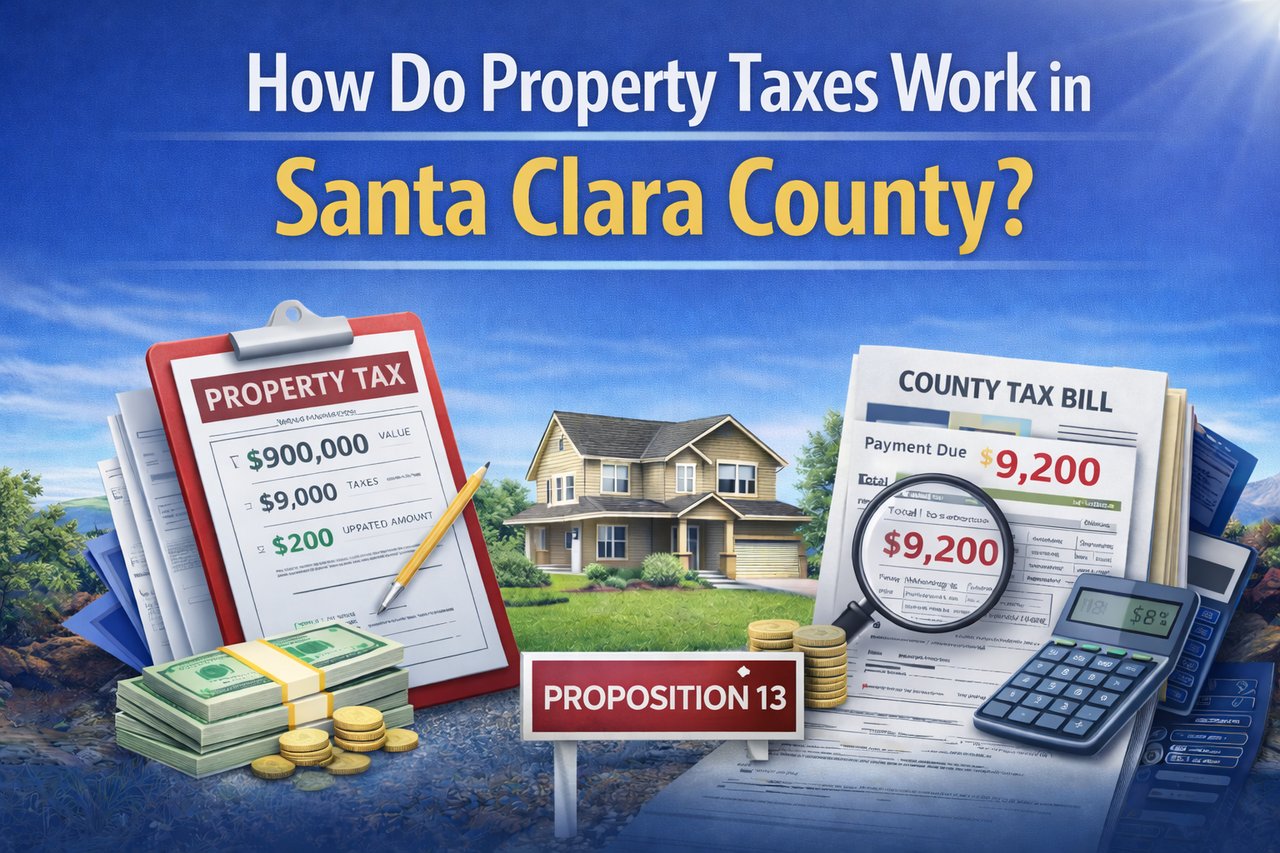
Real Estate Contracts, Disclosures & Property Taxes Explained
One of the most common questions I get from buyers moving to San Jose and the surrounding areas is simple:
How do property taxes actually work here?
California’s property tax system is very different from many other states, and understanding how it works can help buyers avoid surprises after purchasing a home.
In Santa Clara County, property taxes are largely governed by Proposition 13, which limits how much property taxes can increase each year.
In this guide, I’ll explain how property taxes are calculated, what happens when a home sells, and what buyers and homeowners should expect.
For a broader overview of contracts, disclosures, and tax-related topics, you can start here:
👉 https://re38.com/san-jose-real-estate-contracts-disclosures-tax-guide
In Santa Clara County, the base property tax rate is approximately 1% of the assessed value of the property.
However, the actual amount homeowners pay is usually slightly higher because of additional voter-approved local assessments.
Most homeowners in the area pay roughly 1.1% to 1.25% of the property value annually.
For example:
• $1,000,000 home → roughly $11,000–$12,500 per year
• $1,500,000 home → roughly $16,500–$18,750 per year
• $2,000,000 home → roughly $22,000–$25,000 per year
These numbers are estimates, but they give buyers a general idea of what to expect.
The property tax amount is based on the assessed value of the property.
When a home sells, the assessed value usually resets to the new purchase price.
For example:
If a home sells for $1,800,000, that price typically becomes the new assessed value.
The county then calculates property taxes using that value.
That is why buyers often see a property tax increase after purchasing a home, even if the previous owner had much lower taxes.
This also connects closely with the topic of tax implications when buying or selling, which I explained here:
👉 https://re38.com/blog/what-tax-implications-come-with-buying-or-selling-a-home-in-san-jose
California’s Proposition 13 is one of the key reasons property taxes behave differently here than in many other states.
Under Proposition 13:
• Property taxes are based on the purchase price when the property was bought
• The assessed value can only increase up to 2% per year
• The tax rate remains relatively stable
This means homeowners who have owned their property for many years often have much lower property taxes than newer buyers.
For example:
Someone who bought a home in 2000 for $500,000 may still be paying taxes based on a value far below today’s market price.
Meanwhile, a new buyer purchasing the same home today would have taxes based on the current purchase price.
After buying a home, many buyers receive something called a supplemental property tax bill.
This happens because the county adjusts the tax assessment after the ownership change.
Here’s how it works:
• The previous owner’s taxes were based on their assessed value
• The property sells at a new price
• The county recalculates taxes based on the new value
• The difference is billed as a supplemental tax
This bill is separate from the normal property tax bill and usually arrives a few months after closing.
Property taxes in Santa Clara County are typically paid twice per year.
The due dates are:
• First installment: November 1 (delinquent after December 10)
• Second installment: February 1 (delinquent after April 10)
Many homeowners pay these taxes through their mortgage escrow account, where the lender collects a portion of the taxes each month and pays them on the homeowner’s behalf.
If you want to understand how this affects monthly payments, this guide may help:
👉 https://re38.com/blog/how-do-i-lower-my-monthly-mortgage-payment-in-san-jose-2026-guide
Yes, property taxes can sometimes decrease.
If property values drop significantly, homeowners may qualify for a temporary reassessment reduction.
This is sometimes called a Prop 8 reduction.
However, once the market recovers, the assessed value can increase again until it reaches the original Prop 13 value.
In addition to the base property tax rate, homeowners may also pay smaller additional taxes for local services.
These can include:
• School district bonds
• Infrastructure improvements
• Local service assessments
• Community facilities districts (CFDs)
These are typically included in the overall property tax bill.
Property taxes are one of the most important costs buyers need to factor into affordability.
Along with your mortgage payment, they affect your total monthly housing cost.
That is why I always encourage buyers to understand their full financial picture before making an offer.
These guides can also help with that process:
👉 https://re38.com/blog/how-much-house-can-i-afford-in-san-jose
👉 https://re38.com/blog/how-do-debt-to-income-ratios-affect-loan-approval-in-san-jose-2026-guide
Understanding taxes, loan approval, and overall affordability together helps buyers make better decisions.
When I’m working with buyers in San Jose and Santa Clara County, I always make sure they understand property taxes before they make an offer.
The key things to remember are:
• Taxes usually reset when a home sells
• The tax rate is roughly around 1.1%–1.25%
• Prop 13 limits annual increases to about 2%
• Supplemental tax bills may arrive after closing
Once buyers understand these basics, property taxes become much easier to plan for.
If you're planning to buy a home and want help understanding property taxes, financing, or the buying process, I’m always happy to help.
Every property and situation is a little different, and getting clarity early can make the process much smoother.
📞 Zaid Hanna
408-515-1613
🌐 www.re38.com
Stay up to date on the latest real estate trends.
October 2, 2026
October 2, 2026
October 2, 2026

October 2, 2026

October 2, 2026
September 30, 2026
You’ve got questions, and we can’t wait to answer them.