What Is Title Insurance and Why Do I Need It When Buying a Home?
Real Estate Contracts, Disclosures & Property Taxes Explained
Real Estate Contracts, Disclosures & Property Taxes Explained
One of the questions I get from buyers during escrow is:
“What exactly is title insurance, and why am I paying for it?”
It’s a great question because title insurance is one of the most important protections in a real estate transaction, but it’s also one of the least understood.
In simple terms, title insurance protects you from ownership issues tied to the property’s past.
And in a market like San Jose, where properties have changed hands many times over the years, that protection matters.
For a broader overview of contracts, disclosures, and legal protections, start here:
👉 https://re38.com/san-jose-real-estate-contracts-disclosures-tax-guide
Before understanding title insurance, it helps to understand what “title” means.
Title refers to:
When you buy a home, you are not just buying the physical structure.
You are buying clear ownership rights, and that ownership must be verified before closing.
Title insurance protects buyers (and lenders) from issues related to the property’s ownership history.
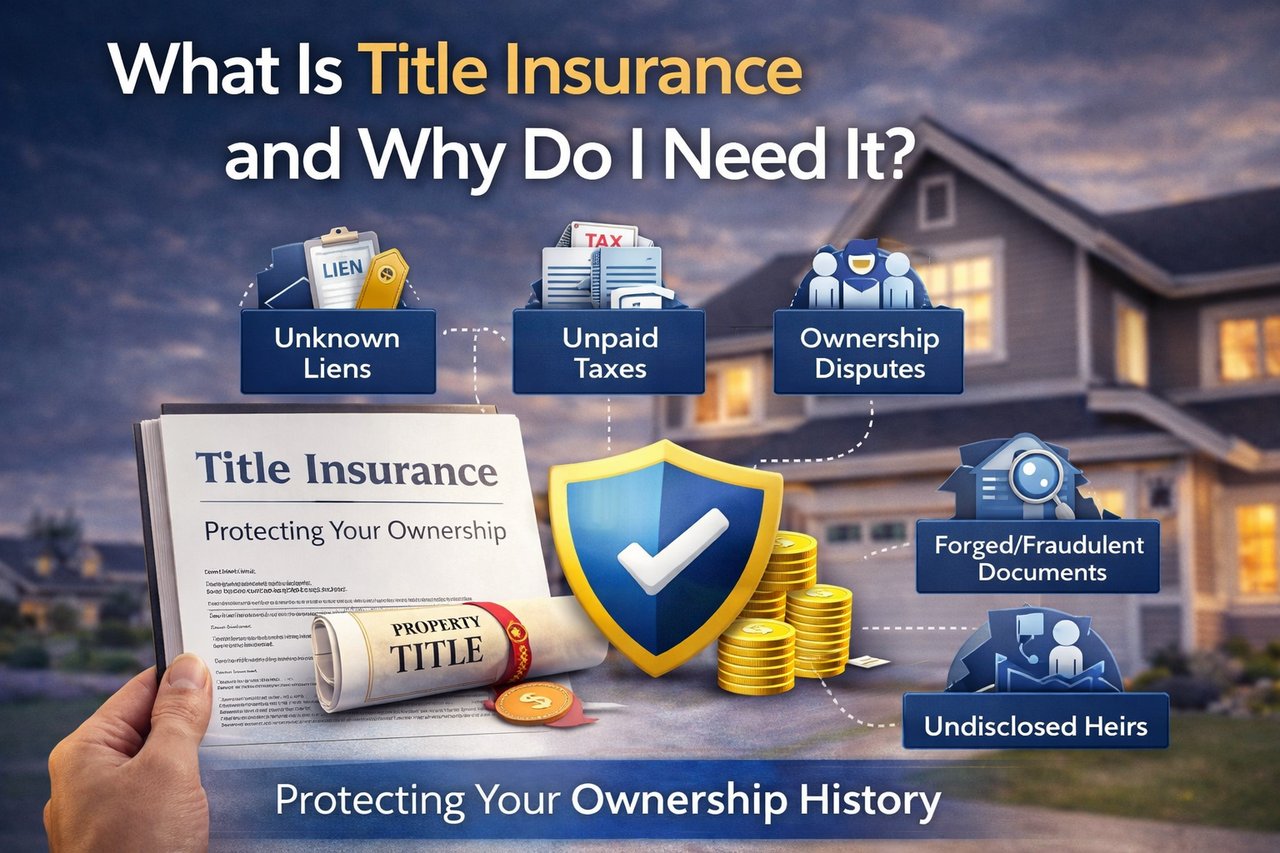
These issues can include:
• Unknown liens on the property
• Unpaid property taxes
• Errors in public records
• Fraud or forged documents
• Ownership disputes
• Undisclosed heirs claiming ownership
• Easements or restrictions that affect use of the property
These problems are rare, but when they happen, they can be expensive and complicated.
Title insurance helps protect you financially if any of these issues arise.
A lot of buyers assume that once escrow is done, everything is clean and final.
But the reality is:
Not all issues show up immediately.
Some problems can surface later, especially if they involve:
Without title insurance, the buyer could be responsible for:
This is why I always explain to clients that title insurance is not just another fee — it is protection against unknown risk.
There are typically two types of title insurance in a transaction.
This protects the buyer.
It covers:
This is usually a one-time fee paid at closing.
This protects the lender.
If you are getting a loan:
This does not replace the owner’s policy, which protects you personally.
Title insurance is part of the escrow and closing process.
Before closing:
• A title company researches the property’s history
• They identify any issues that need to be resolved
• They issue a preliminary title report
This report shows:
If you want to understand how this fits into the full closing process, read:
👉 https://re38.com/blog/what-happens-during-escrow-and-closing-in-san-jose-2026-guide
Title insurance and contingencies are related, but they serve different purposes.
Contingencies:
Title insurance:
If you haven’t read it yet, this ties closely into:
👉 https://re38.com/blog/how-do-contingencies-protect-me-real-estate-california
There are a few common misunderstandings I hear from buyers.
Yes. Even though issues are not common, when they happen, they can be significant.
Yes, but:
That is why title insurance exists.
No.
Title insurance is:
In San Jose and throughout Santa Clara County:
• Many properties have long ownership histories
• Homes may have changed hands multiple times
• Older records may not always be perfect
That is why having a clear and insured title is especially important.
It is not just about closing the deal — it is about protecting ownership long-term.
When I explain title insurance to buyers, I keep it simple:
• You are protecting your ownership
• You are protecting your investment
• You are protecting yourself from unknown issues
It is one of those things you hope you never need.
But if you ever do need it, you will be glad you have it.
If you're planning to buy and want help understanding title, contracts, contingencies, and how to protect yourself in a transaction, I’m always happy to help.
📞 Zaid Hanna
408-515-1613
🌐 www.re38.com
Stay up to date on the latest real estate trends.
October 2, 2026
October 2, 2026
October 2, 2026

October 2, 2026
October 2, 2026
September 30, 2026
You’ve got questions, and we can’t wait to answer them.