What Is a 1031 Exchange and How Does It Work for Real Estate Investors?
Real Estate Investing & Rental Property Strategies
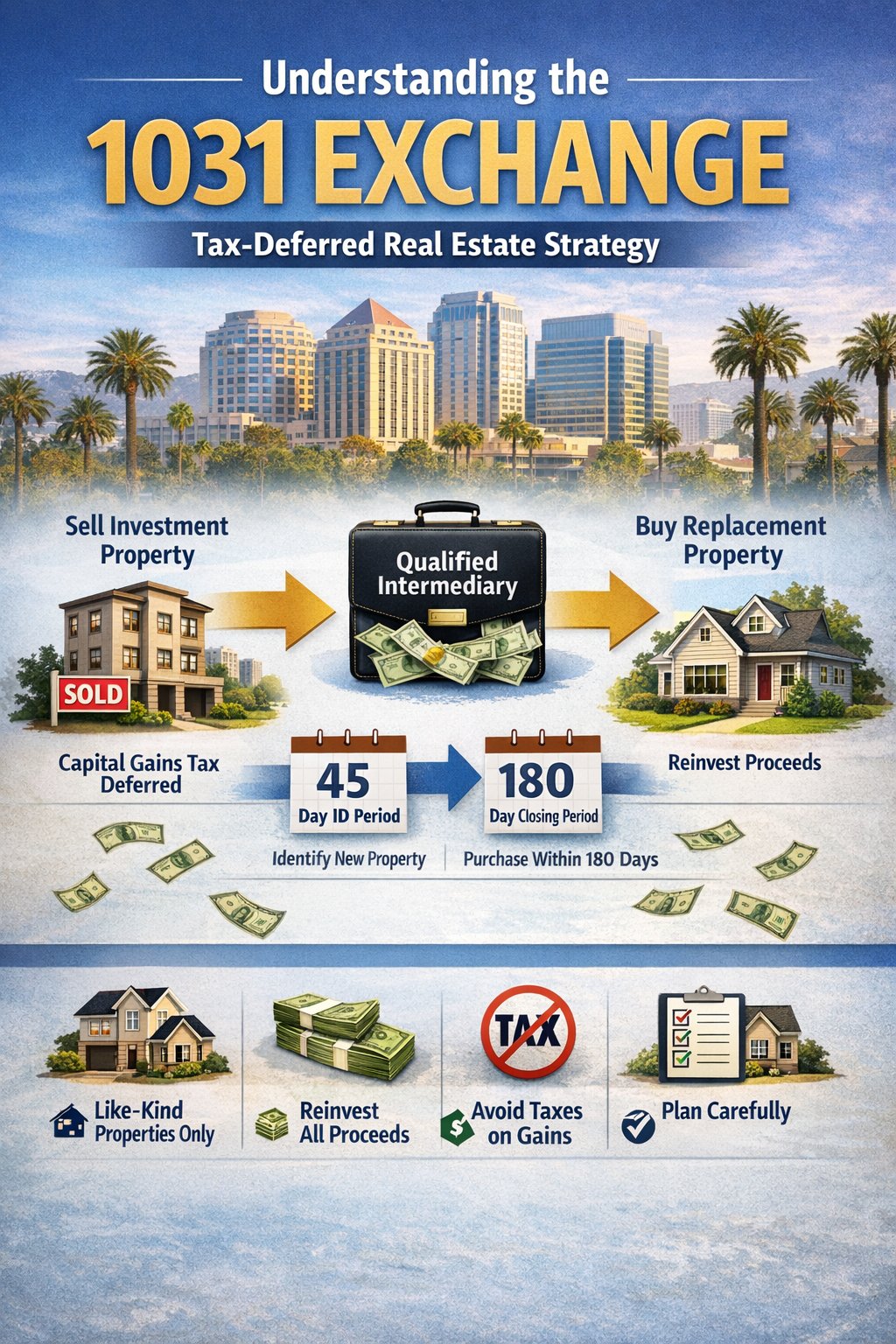
Real Estate Investing & Rental Property Strategies
One of the most powerful strategies I talk about with real estate investors is the 1031 exchange.
And the reason is simple:
It allows you to defer capital gains taxes when you sell an investment property and reinvest into another.
For many investors in San Jose and the Bay Area, this can mean preserving hundreds of thousands of dollars in equity that would otherwise go to taxes.
But like most tax strategies, it only works if you understand the rules and plan properly.
In this guide, I’ll break down what a 1031 exchange is, how it works, and what investors need to know before using it.
For a broader overview of real estate investing strategies, start here:
👉 https://re38.com/san-jose-real-estate-investing-rental-strategies
A 1031 exchange (named after Section 1031 of the IRS tax code) allows real estate investors to:
• Sell an investment property
• Reinvest the proceeds into another property
• Defer paying capital gains taxes
The key word here is defer, not eliminate.
Instead of paying taxes immediately, you roll your gains into the next property.
The biggest reason investors use a 1031 exchange is to preserve capital and grow their portfolio faster.
Without a 1031 exchange:
• You sell a property
• You pay capital gains tax
• You have less money to reinvest
With a 1031 exchange:
• You defer taxes
• You keep more of your equity working for you
• You can potentially scale into larger or better-performing properties
This is one of the most effective ways to build long-term wealth through real estate.
Not every property qualifies for a 1031 exchange.
The property must be:
• An investment property or business-use property
• Not a primary residence
• Exchanged for another like-kind investment property
“Like-kind” is broader than most people think.
Examples:
This flexibility is what makes 1031 exchanges powerful.
Timing is one of the most important parts of a 1031 exchange.
There are two key deadlines:
You must identify your replacement property within 45 days of selling your original property.
You must close on the new property within 180 days.
If you miss these deadlines, the exchange fails and taxes become due.
This is why planning ahead is critical.
This is a big one.
When you sell your property:
• You cannot receive the funds directly
• The money must go through a qualified intermediary (QI)
The intermediary:
If you touch the money, the exchange is disqualified.
If you don’t reinvest all the proceeds:
• The portion not reinvested becomes taxable
• This is known as “boot”
To fully defer taxes:
• You must reinvest all proceeds
• You must purchase equal or greater value
This is where I see investors really benefit.
A 1031 exchange allows you to:
• Upgrade properties
• Consolidate multiple properties into one
• Move into higher cash-flow investments
• Shift markets or asset types
• Reposition your portfolio over time
If you’re already analyzing deals, this ties directly into:
👉 https://re38.com/blog/how-do-i-calculate-roi-and-cash-flow-on-a-rental-property-in-san-jose
And if you're evaluating whether to invest in the current market:
👉 https://re38.com/blog/is-real-estate-a-good-investment-right-now-in-san-jose
I’ve seen investors run into issues when they:
• Wait too long to plan the exchange
• Miss the 45-day identification window
• Choose poor replacement properties under pressure
• Don’t fully understand reinvestment rules
• Work without proper guidance
A 1031 exchange is powerful, but it has to be executed correctly.
No — it defers them.
However, many investors continue exchanging properties over time, which allows them to:
• Keep deferring taxes
• Grow their portfolio
• Potentially avoid capital gains through estate planning strategies
This is one reason real estate remains one of the most tax-advantaged investment vehicles.
When I talk to investors in San Jose, I keep it simple:
• A 1031 exchange is a wealth-building tool
• It allows your equity to keep working for you
• It requires planning and timing
• It should be part of a long-term strategy
If used correctly, it can make a major difference in how quickly you grow your portfolio.
If you're considering selling an investment property and want to explore whether a 1031 exchange makes sense for your situation, I’m happy to walk you through it.
📞 Zaid Hanna
408-515-1613
🌐 www.re38.com
Stay up to date on the latest real estate trends.

October 21, 2026

October 20, 2026

October 19, 2026

October 14, 2026

October 12, 2026

October 9, 2026
You’ve got questions, and we can’t wait to answer them.