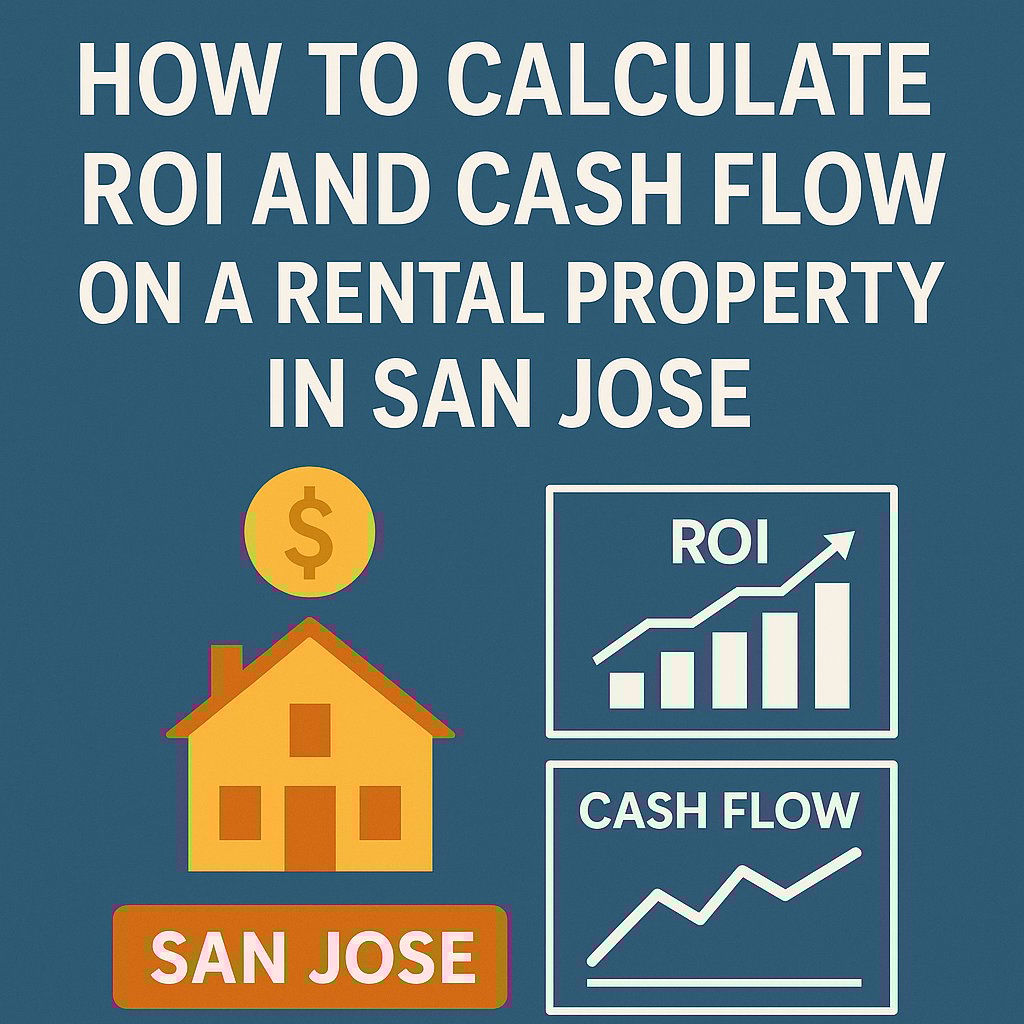
How Do I Calculate ROI and Cash Flow on a Rental Property in San Jose?
Real Estate Investing & Rental Property Strategies
Real Estate Investing & Rental Property Strategies
San Jose is one of the most unique and competitive rental markets in the country. Returns here do not look like typical U.S. markets — but when you understand how ROI, cash flow, appreciation, and tax benefits actually work in Silicon Valley, the long-term wealth potential becomes clear.
Whether you're a first-time investor or a seasoned buyer, this guide breaks down exactly how to analyze a rental property in San Jose using simple formulas and more advanced investor calculations.
For a full breakdown of strategies, check out:
👉 San Jose Real Estate Investing & Rental Strategies Guide
San Jose investors typically earn returns through:
San Jose consistently ranks among the highest-appreciating markets in California.
Tenants help pay down your mortgage every month — even if cash flow is tight.
These two factors often outweigh lower cash flow and make San Jose a powerful long-term investment market.
Where:
Rental income = market rent
Mortgage = principal + interest
Taxes = ~1.1% of purchase price
Insurance = varies by property size
Maintenance = typically 5–8%
Management = 6–8% (if outsourced)
Utilities = applies if landlord pays
Cash flow should be positive or break-even, knowing appreciation and tax benefits carry the long-term value.
3-bed home in Cambrian
Approx purchase price: $1.4M
Rent estimate: $4,200/month
Mortgage (20% down @ 6.5%): ~ $7,000
Taxes: ~$1,280
Insurance: ~$120
Maintenance: ~$250
Management: ~$300
≈ $8,950
$4,200 – $8,950 = –$4,750/month (negative)
This surprises many investors.
But here's why San Jose investors still win…
San Jose often appreciates 3–6% per year.
On a $1.4M home:
4% = $56,000/year
5% = $70,000/year
Year one mortgage paydown ≈ $22,000
Over 5 years: ≈ $120,000
Depreciation on residential rentals = $1,000,000 ÷ 27.5
≈ $36,000/year depreciation deduction
This reduces taxable income — HUGE advantage.
Wealth Factor | Amount |
|---|---|
Appreciation (4%) | $56,000 |
Principal Paydown | $22,000 |
Tax Benefit Value (est.) | $10,000–$15,000 |
Total Annual ROI | $88,000–$93,000 |
Even with negative cash flow, the investment generates substantial wealth.
This is why San Jose rewards long-term investors.
Serious investors use additional formulas:
San Jose cap rates typically range:
2.5% – 4%
Low cap rates are normal in high-appreciation markets.
Because appreciation and tax benefits dominate returns here, cash-on-cash is often lower — but long-term ROI is high.
This calculates return considering:
cash flow
appreciation
mortgage paydown
tax benefits
San Jose IRR is often 12–18% over 10 years, outperforming most markets.
Purchase: $1.0M
Rent: $3,600
Cash flow: Close to break-even
Appreciation: Strong
Tenant profile: Stable, long-term renters
ROI outlook: High long-term return + low maintenance
Purchase: $1.2M
Rent: $3,800
Cash flow: Slightly negative
Appreciation: Moderate
ROI outlook: Best combined ADU potential + future cash flow
Purchase: $1.3M
Rent after remodel: $4,300
Cash flow: Slightly negative
Appreciation: Strong
ROI outlook: High long-term equity + strong appreciation
San Jose investors often ask whether they should buy:
Sacramento
Austin
Vegas
Phoenix
Boise
Tennessee
These markets offer higher cash flow, but:
lower long-term appreciation
weaker job markets
higher volatility
inconsistent tenant profiles
Most San Jose investors end up pursuing a dual strategy:
✔ San Jose for long-term appreciation
✔ Out-of-state for cash flow
If you're thinking about investing in San Jose, your next step is simple:
We’ll review:
your budget
your down payment options
your preferred neighborhoods
realistic cash flow expectations
long-term ROI scenarios
whether a San Jose or out-of-state property fits your goals
👉 Contact me and I’ll break down your options clearly.
Schedule a no-pressure consultation.
I’ll help you analyze ROI, cash flow, and long-term appreciation so you can make smart investment decisions.
Zaid Hanna
408-515-1613
www.re38.com
Stay up to date on the latest real estate trends.

October 20, 2026

October 19, 2026

October 14, 2026

October 12, 2026

October 9, 2026
October 7, 2026
You’ve got questions, and we can’t wait to answer them.