Should I Hire a Property Manager or Self-Manage My Rental Property?
Real Estate Investing & Rental Property Strategies
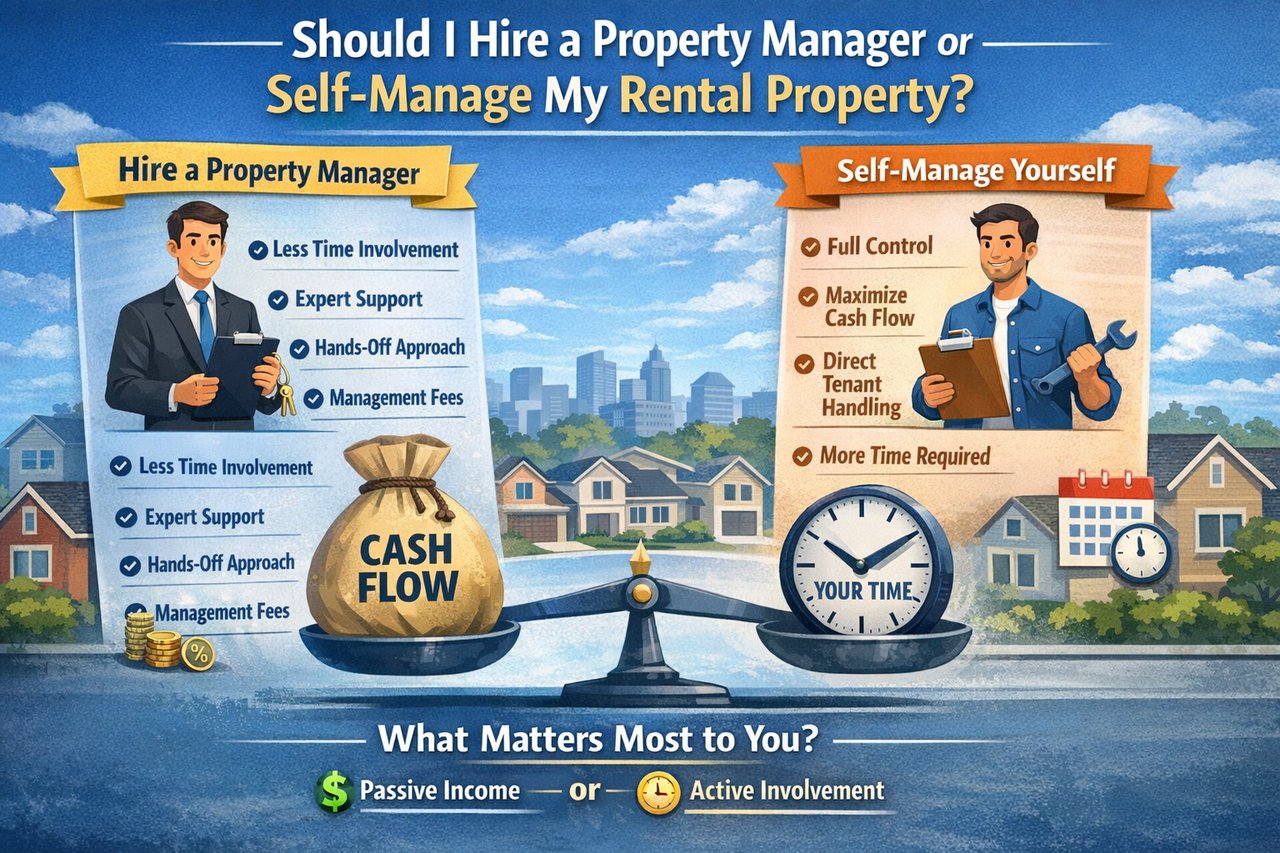
Real Estate Investing & Rental Property Strategies
One of the most common questions I get from real estate investors is:
“Should I manage my rental property myself or hire a property manager?”
The answer depends on your goals, your time, and how involved you want to be.
There is no one-size-fits-all answer, but understanding the pros and cons of each approach can help you make a better decision.
If you’re just starting to evaluate rental properties, this guide may help first:
👉 https://re38.com/blog/is-real-estate-a-good-investment-right-now-in-san-jose
And if you’re analyzing deals:
👉 https://re38.com/blog/how-do-i-calculate-roi-and-cash-flow-on-a-rental-property-in-san-jose
A property manager handles the day-to-day operations of your rental.
This typically includes:
• Marketing the property
• Finding and screening tenants
• Handling leases and paperwork
• Collecting rent
• Coordinating maintenance and repairs
• Managing tenant communication
• Handling evictions if needed
In short, they take over the operational side of being a landlord.
For many investors, the biggest benefit is time and convenience.
Hiring a property manager allows you to:
• Be more hands-off
• Avoid dealing with tenants directly
• Reduce day-to-day stress
• Scale your portfolio more easily
• Rely on professional systems and processes
This is especially helpful if:
The biggest downside is cost.
Property managers typically charge:
• Around 8%–10% of monthly rent
• Leasing fees when placing a tenant
• Additional fees for certain services
This directly impacts your cash flow.
If you’re focused on maximizing returns, this is something you need to factor in.
Self-managing gives you full control over your investment.
You can:
• Save on management fees
• Screen tenants yourself
• Control maintenance decisions
• Maximize cash flow
• Stay closely involved in the property
For some investors, especially those starting out, this makes a lot of sense.
Self-managing also comes with responsibilities.
You are responsible for:
• Tenant communication
• Maintenance coordination
• Legal compliance
• Rent collection
• Handling issues and emergencies
This can become time-consuming, especially as your portfolio grows.
This is where the decision really comes down to:
Are you optimizing for cash flow or time?
If you hire a property manager:
• Lower cash flow
• Less time commitment
If you self-manage:
• Higher cash flow
• More time involvement
This ties directly into how you evaluate deals:
👉 https://re38.com/blog/how-do-i-calculate-roi-and-cash-flow-on-a-rental-property-in-san-jose
In my experience, hiring a property manager makes sense when:
• You own multiple properties
• You don’t live near your rental
• You don’t want to deal with tenants
• You value time over maximizing every dollar
• You want to scale your portfolio
At a certain point, time becomes more valuable than the extra cash flow.
Self-managing can be a great option when:
• You are just starting out
• You have one or two properties
• You want to maximize returns
• You are comfortable handling tenants
• You want to learn the business hands-on
A lot of investors start this way and transition later.
Some investors take a hybrid approach.
For example:
• Self-manage locally
• Hire management for out-of-area properties
• Use managers only for tenant placement
• Handle maintenance separately
This gives you flexibility while still reducing workload.
This decision is not just operational — it affects your entire strategy.
It impacts:
• Cash flow
• ROI
• Time commitment
• Scalability
• Stress level
And ultimately, it affects how quickly and comfortably you grow your portfolio.
When I talk to investors, I usually say this:
• If you want to be hands-on → self-manage
• If you want to scale and free up time → hire a manager
There is no wrong answer.
The key is aligning your decision with your long-term goals.
If you're considering buying a rental property and want help evaluating deals, understanding cash flow, or building a long-term investment strategy, I’m happy to help.
📞 Zaid Hanna
408-515-1613
🌐 www.re38.com
Stay up to date on the latest real estate trends.

September 21, 2026

September 18, 2026

September 17, 2026

September 14, 2026

September 11, 2026

September 9, 2026
You’ve got questions, and we can’t wait to answer them.