What Disclosures Are Required When Selling a Home in California?
Real Estate Contracts, Disclosures & Property Taxes Explained
Real Estate Contracts, Disclosures & Property Taxes Explained
When I sit down with sellers in San Jose, one of the first things I explain is this:
Disclosures are not optional — they are required.
And more importantly, they are there to protect you as much as they protect the buyer.
California has some of the most detailed disclosure requirements in the country, and understanding them upfront can help you avoid delays, renegotiations, and potential legal issues.
In this guide, I’ll walk through the most important disclosures sellers need to provide and why they matter.
For a broader overview of contracts, disclosures, and tax-related topics, start here:
👉 https://re38.com/san-jose-real-estate-contracts-disclosures-tax-guide
Disclosures are documents where the seller shares known information about the property.
This includes:
The key word here is known.
Sellers are not expected to investigate like inspectors, but they are required to be honest about what they already know.
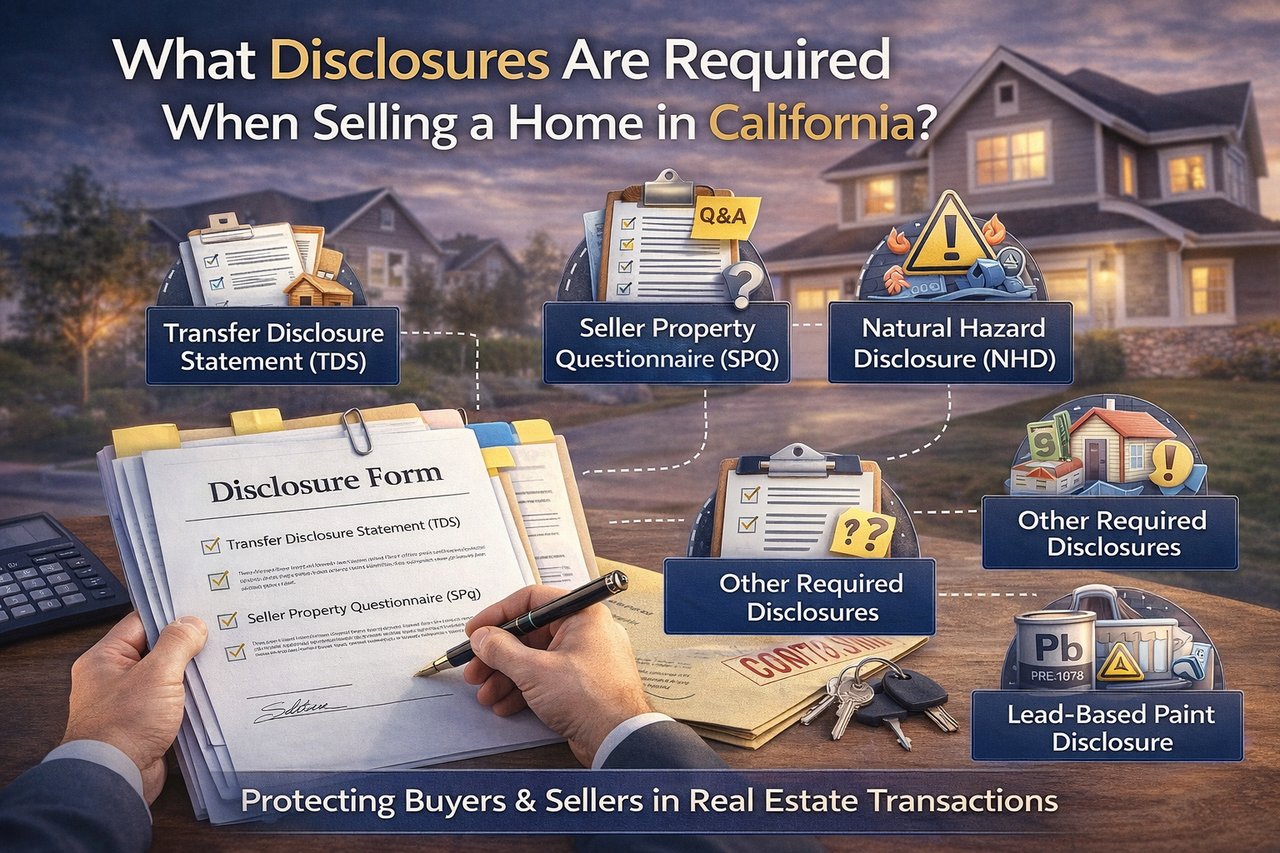
One of the most important documents is the Transfer Disclosure Statement (TDS).
This form requires sellers to disclose:
It also includes a section where the real estate agent provides their observations.
I always tell sellers:
Take this seriously and be thorough.
The SPQ goes deeper than the TDS.
It typically covers:
This is where a lot of important details come out.
This report identifies whether the property is located in specific hazard zones.
These may include:
This is usually prepared by a third-party company and is standard in most California transactions.
If the home was built before 1978, sellers are required to provide:
• A lead-based paint disclosure
• An informational pamphlet for buyers
This is a federal requirement, not just California-specific.
Depending on the property, sellers may also need to provide:
• Death on property (within a certain timeframe)
• HOA documents (if applicable)
• Water heater and smoke detector compliance
• Solar or energy system agreements
• Permit history (if available)
• Inspection reports (if completed)
Every property is a little different, which is why I always guide sellers through this process step-by-step.
A lot of sellers think disclosures are just for buyers.
But in reality, disclosures are one of the best ways to protect yourself as a seller.
When you disclose properly:
• You reduce the risk of future disputes
• You create transparency
• You build trust with buyers
• You protect yourself legally after closing
Most issues in real estate happen when something was not disclosed.
If a seller fails to disclose a known issue:
• The buyer may take legal action
• The seller could be financially liable
• The transaction could fall apart
This is why I always emphasize:
When in doubt, disclose.
It is always safer to provide more information than less.
Disclosures don’t just protect you — they also shape the negotiation.
Buyers may:
This is completely normal.
If you want to understand how buyers evaluate these situations, this guide helps:
👉 https://re38.com/blog/how-do-contingencies-protect-me-real-estate-california
And if you want to understand contract risk overall:
👉 https://re38.com/blog/can-i-back-out-of-a-real-estate-contract-california
In San Jose and Santa Clara County:
• Many homes are older
• Properties may have been remodeled multiple times
• Permit history can vary
• Buyers are very detail-oriented
This makes disclosures even more important.
The more clear and complete your disclosures are, the smoother your transaction will be.
When I work with sellers, I always emphasize a few key things:
• Be honest and thorough
• Don’t try to hide issues
• Provide as much detail as possible
• Use disclosures to build trust, not avoid it
The goal is not perfection.
The goal is transparency and protection.
If you're planning to sell and want help preparing disclosures, pricing your home, and navigating the process the right way, I’m always happy to help.
📞 Zaid Hanna
408-515-1613
🌐 www.re38.com
Stay up to date on the latest real estate trends.
October 2, 2026

October 2, 2026
October 2, 2026

October 2, 2026

October 2, 2026

September 30, 2026
You’ve got questions, and we can’t wait to answer them.