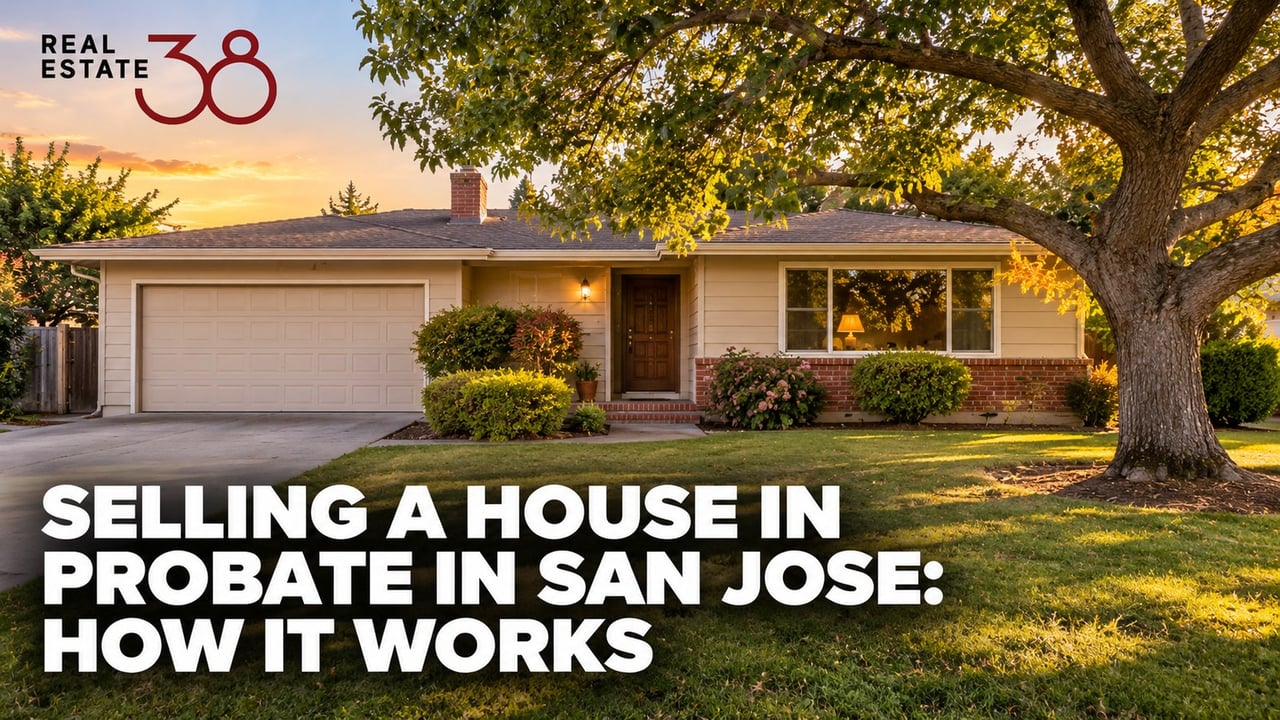
Selling a House in Probate in San Jose: How It Works
How to Sell Your Home in San Jose: Pricing, Prep & Marketing
How to Sell Your Home in San Jose: Pricing, Prep & Marketing
By Zaid Hanna, Broker, Real Estate 38 · CA DRE #01421581 · Published November 2026
Yes, you can sell a house in probate in San Jose, but the estate's personal representative has to follow California's probate rules to do it. Depending on the authority the court granted, the sale either goes through a 15-day Notice of Proposed Action or needs a court confirmation hearing in Santa Clara County Superior Court, where other buyers can overbid. With court confirmation, the price generally has to be at least 90% of the probate appraisal. Here's how each path works for heirs, executors and buyers.
A probate sale is the sale of a home owned by someone who has died, made by the court-appointed personal representative of their estate (the executor named in the will, or an administrator if there's no will). In San Jose, probate cases are handled by the Probate Division of Santa Clara County Superior Court.
Not every inherited home goes through probate. A home held in a living trust is usually sold by the trustee without the probate court. California also has a simpler court petition for a primary residence worth up to $750,000 (adjusted periodically) under Probate Code section 13151, though few San Jose homes fall under that limit. If you're still sorting out taxes and options as an heir, start with my guide to selling an inherited home in San Jose.
No. It depends on whether the personal representative has authority under the Independent Administration of Estates Act (IAEA), and whether that authority is full or limited.
The letters issued by the court state which authority the representative has. I ask for a copy before we set a pricing or listing plan, because it changes the timeline and how offers work.
When a sale needs court confirmation, the representative accepts an offer subject to the court's approval, and the court makes the final call at a hearing. The main steps:
The first overbid has to be at least 10% more on the first $10,000 of the original bid and 5% more on the amount above $10,000, under Probate Code section 10311.
On a $1,500,000 accepted offer, that works out to $1,000 on the first $10,000 plus $74,500 on the remaining $1,490,000. The first overbid would need to be at least $1,575,500. In a high-priced market like San Jose, that gap discourages casual overbidders, but a motivated buyer can still show up.
Most of the mistakes I see in probate sales come from treating them like a normal listing. A few things to settle first:
For the full selling process, see my guide to selling your San Jose home.
Probate homes can be a real opportunity for buyers, especially ones open to a home that needs updating. But the process asks for more patience and planning than a standard purchase.
I represent buyers on probate purchases too. See how I work with San Jose home buyers.
A full-authority sale adds the 15-day notice period to a normal escrow. A court-confirmed sale adds the time it takes to get a hearing on the court's calendar, plus the overbid risk at the hearing. Either way, the sale sits inside the larger probate case, which has its own timeline. The California courts' probate self-help pages explain the overall process.
Probate law is technical, and this guide isn't legal advice. The estate's attorney should confirm the authority, notices and filings. My role is the real estate side: pricing, preparation, marketing and managing offers so the sale holds up.
My team and I work with both sides of probate sales: executors and heirs selling an estate home, and buyers purchasing one. Since 2004, I've helped with more than 1,800 home sales across San Jose and the South Bay. On a probate sale, I coordinate with the estate's attorney, price against the appraisal, and keep every heir informed so the sale doesn't stall.
If you're handling an estate, start with my San Jose home selling process, or call me to talk through your situation.
Yes. The court-appointed personal representative can sell a house during probate. With full authority under the Independent Administration of Estates Act, they can sell after giving heirs a 15-day Notice of Proposed Action. With limited or no authority, the sale has to be confirmed by the probate court at a hearing, where other buyers can submit higher bids.
Under Probate Code section 10311, the first overbid at a confirmation hearing must be at least 10% more on the first $10,000 of the original bid and 5% more on the amount above $10,000. On a $1,500,000 accepted offer, the first overbid would need to be at least $1,575,500. The court then confirms the sale to the highest qualified bidder.
For a private sale that needs court confirmation, yes. Probate Code section 10309 generally requires the offer to be at least 90% of the appraised value, and the appraisal must be within one year of the confirmation hearing. Sales made under full independent authority with a Notice of Proposed Action don't go through that confirmation requirement.
Not always. If the personal representative has full authority under the Independent Administration of Estates Act and no one objects to the Notice of Proposed Action, the sale can close without a court hearing. If they have limited authority, no independent authority, or an heir objects, the Santa Clara County probate court must confirm the sale.
A home held in a living trust is usually sold by the successor trustee without going through probate court, so there's no confirmation hearing or court overbid. A probate sale happens when the home was in the deceased person's name alone and passes through the court process. The deed and estate documents show which path applies.
Zaid Hanna
408-515-1613
www.re38.com
Stay up to date on the latest real estate trends.

November 20, 2026
November 18, 2026

November 16, 2026

November 13, 2026
November 11, 2026

November 9, 2026
You’ve got questions, and we can’t wait to answer them.